





What's Happening?
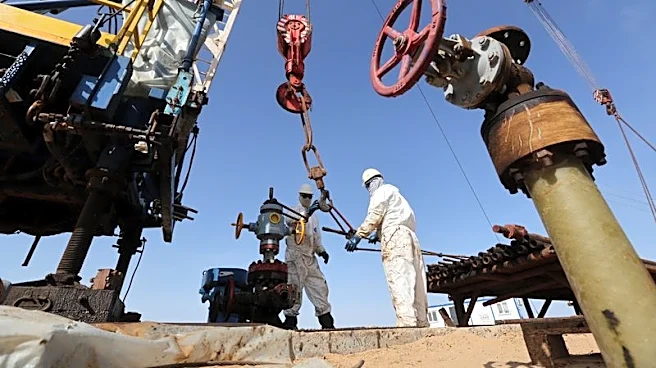
Oil prices experienced a significant surge on Wednesday, with Brent crude rising by 7.47% to $90.37 per barrel and US West Texas Intermediate (WTI) increasing by 7.15% to $84.93 per barrel. This spike is attributed to renewed military actions in the Middle
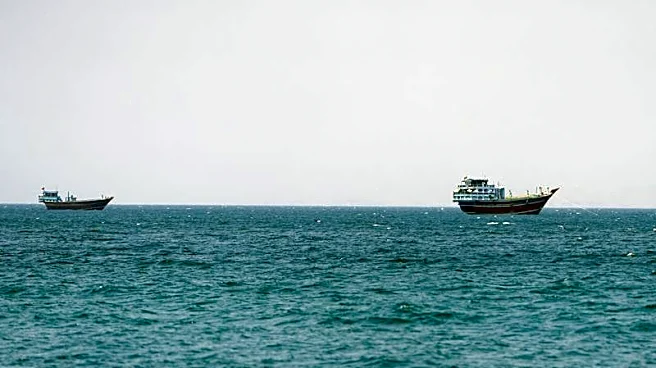
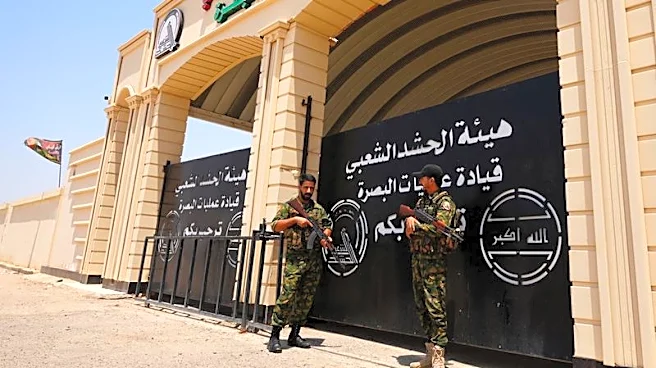
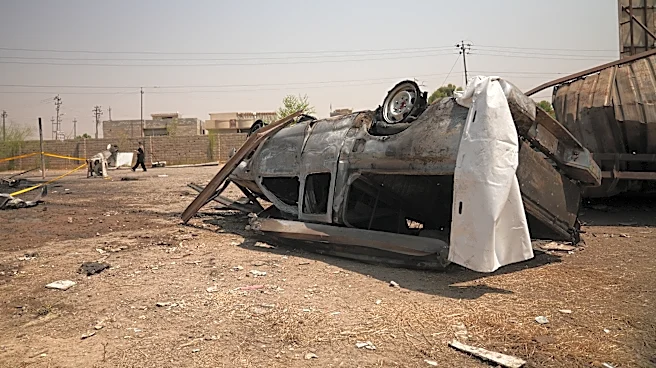
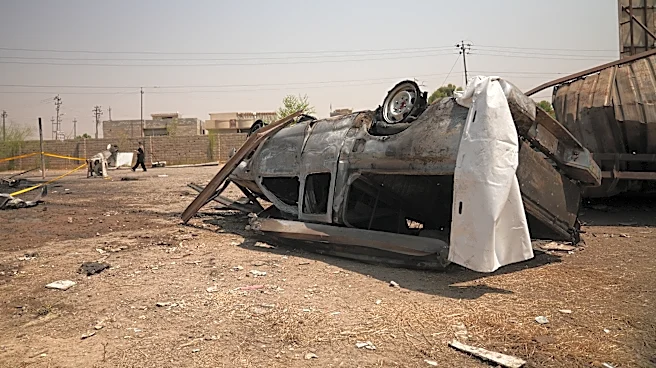
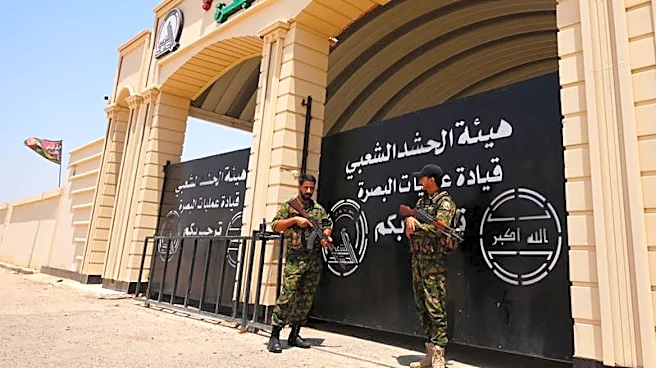
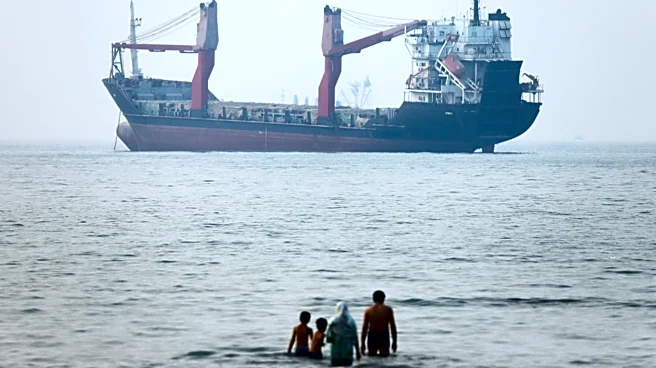
East, involving the United States, Saudi Arabia, and Iran-backed groups, which have heightened concerns over global oil supplies. The tensions have been exacerbated by Iran's threats to control shipping through the Strait of Hormuz, a critical chokepoint for global oil transport. Additionally, US crude inventories have shown a drawdown, further supporting the price increase. The geopolitical situation remains volatile, with the US and Saudi Arabia conducting strikes on Iran-backed groups in Iraq, and Iran targeting ships in the Strait of Hormuz and US bases in Jordan.
Why It's Important?
The escalation in oil prices has significant implications for the global economy, particularly for the United States, which is a major consumer of oil. Higher oil prices can lead to increased costs for transportation and manufacturing, potentially driving up inflation and affecting consumer spending. The tensions in the Middle East also pose risks to global trade, especially if the Strait of Hormuz, through which a substantial portion of the world's oil passes, becomes further restricted. This situation could lead to increased volatility in energy markets, impacting businesses and economies worldwide. The ongoing conflict and its impact on oil prices underscore the fragility of global energy security and the interconnectedness of geopolitical events and economic stability.
What's Next?
As the situation in the Middle East continues to evolve, oil prices are expected to remain volatile. Analysts predict that Brent oil prices could fluctuate between $80 and $100 per barrel in the near term, depending on the developments in the region. The potential for further military actions or diplomatic efforts to resolve the tensions will be closely watched by market participants. Additionally, the response from major oil-consuming countries, including potential strategic reserves releases or diplomatic interventions, could influence the market dynamics. The outcome of these geopolitical tensions will be critical in determining the future trajectory of oil prices and their broader economic impact.