





What's Happening?
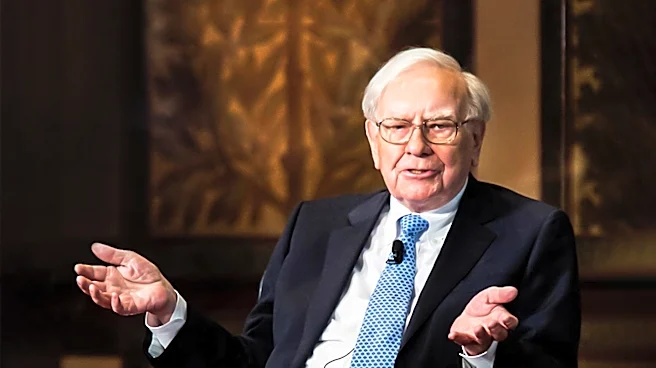
Warren Buffett, the renowned investor and CEO of Berkshire Hathaway, has long been a proponent of passive investing, particularly through index funds. He has consistently recommended the Vanguard S&P 500 ETF as a reliable investment choice for most individuals.
Buffett's advocacy for passive investing dates back to before the creation of the Vanguard ETF, emphasizing that it is challenging to outperform the market. He has highlighted that index funds generally deliver better results for shareholders compared to actively managed funds. Buffett's investment philosophy is rooted in the belief that most investors should opt for index-tracking funds due to their low fees and the difficulty of consistently beating the market. His recommendation is based on the historical performance of index funds, which have often outperformed actively managed funds, especially during market downturns.
Why It's Important?
Buffett's endorsement of passive investing is significant as it underscores a shift in investment strategies towards low-cost, long-term growth vehicles. This approach is particularly relevant for retail investors who may not have the time or expertise to actively manage their portfolios. By recommending the Vanguard S&P 500 ETF, Buffett highlights the importance of minimizing management fees and maximizing returns over time. This strategy aligns with the broader trend of increasing popularity of passive investing, which has been gaining traction due to its simplicity and effectiveness. For the average investor, following Buffett's advice could lead to more stable and predictable investment outcomes, reducing the reliance on market timing and stock-picking skills.
What's Next?
As passive investing continues to gain popularity, it is likely that more investors will shift their focus towards index funds like the Vanguard S&P 500 ETF. This trend could lead to increased competition among fund providers to offer lower fees and better performance. Additionally, the financial industry may see a decline in demand for actively managed funds, prompting a reevaluation of traditional investment strategies. Investors may also become more educated about the benefits of passive investing, leading to a more informed and strategic approach to building wealth. As the market evolves, the principles of passive investing advocated by Buffett are expected to remain a cornerstone of investment strategies for many individuals.
Beyond the Headlines
The rise of passive investing raises questions about the future role of active fund managers and the potential impact on market dynamics. As more capital flows into index funds, there may be concerns about market efficiency and the ability of passive funds to influence stock prices. Additionally, the focus on low-cost investing could pressure traditional financial advisors to adapt their services to remain competitive. The ethical implications of passive investing, such as the concentration of power among a few large fund providers, may also become a topic of discussion. Overall, the shift towards passive investing reflects broader changes in the financial landscape, emphasizing the need for transparency, cost-effectiveness, and long-term planning.