








What's Happening?
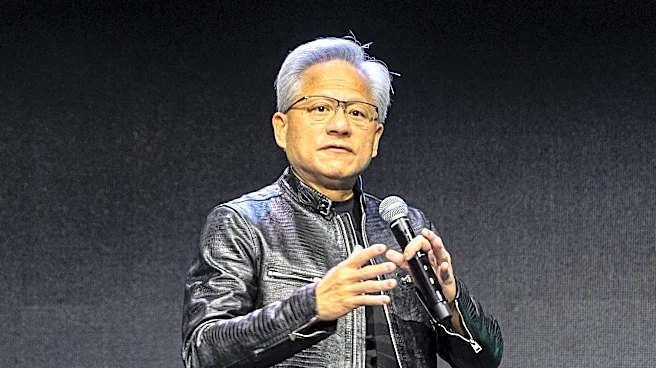
Nvidia CEO Jensen Huang has resigned following revelations of at least two extramarital affairs, one of which involved a businesswoman suspected by U.S. intelligence officials of spying for China. The resignation occurred on Thursday, November 12, 2026.
This incident highlights the alleged use of romantic relationships as an espionage tactic, commonly referred to as a 'honey trap,' to gather intelligence and gain influence. Former NPR China correspondent Frank Langfitt, who reported from China for a decade, has examined this tactic in the context of the Nvidia scandal. The allegations suggest a significant breach of security and trust within a leading artificial intelligence chipmaking company, raising concerns about corporate vulnerabilities to foreign intelligence operations. The company has not yet released further details regarding the succession plan or the immediate impact on its operations.
Why It's Important?
This event carries significant implications for U.S. national security and the technology sector. Nvidia is a global leader in artificial intelligence chip manufacturing, a critical component for advanced computing and defense technologies. The potential for a foreign adversary, specifically China, to gain intelligence or influence through the CEO of such a pivotal company poses a substantial risk to U.S. technological superiority and economic competitiveness. The incident underscores the vulnerability of high-profile executives to sophisticated espionage tactics and may prompt increased scrutiny and security protocols within major U.S. corporations, particularly those involved in sensitive technological development. It also highlights the ongoing geopolitical competition for technological dominance and the varied methods employed to achieve it.
What's Next?
The immediate next steps will likely involve Nvidia's board of directors appointing an interim or permanent successor to Jensen Huang. This transition will be closely watched by investors, competitors, and national security agencies to ensure stability and continuity in the company's leadership and strategic direction. U.S. intelligence agencies may intensify their investigations into the extent of any information compromised and the broader network involved in the alleged espionage. Furthermore, this incident could trigger a review of security clearances and personal conduct policies for executives in critical technology sectors across the U.S. government and private industry. Companies may also implement more rigorous background checks and awareness training for their leadership to mitigate similar risks in the future.
Beyond the Headlines
The Nvidia scandal extends beyond corporate governance and individual conduct, touching upon deeper ethical and geopolitical dimensions. The alleged 'honey trap' tactic highlights the insidious nature of modern espionage, which often exploits personal vulnerabilities rather than relying solely on traditional hacking or infiltration. This incident could lead to a broader re-evaluation of corporate espionage defense strategies, moving beyond cybersecurity to include human intelligence and counter-intelligence measures. Culturally, it may foster increased suspicion and caution in international business dealings, particularly with entities from nations perceived as engaging in such tactics. Legally, it could prompt discussions about corporate liability in cases of executive compromise and the legal frameworks governing foreign influence operations within U.S. companies.