






What's Happening?
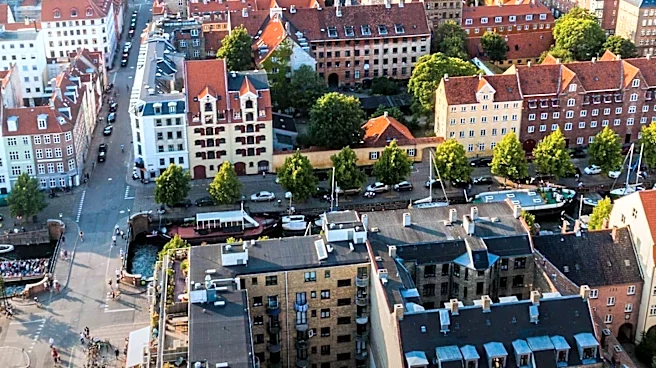
Copenhagen Fashion Week is actively working to establish itself as a prominent global fashion capital, often referred to as the 'fifth fashion capital.' This initiative involves highlighting local brands' environmental agendas and offering unique city
experiences to attract designers. The event is a collaborative effort between Danish Fashion & Textile, Creative Denmark, and Copenhagen International Fashion Fair, all aimed at strengthening the international standing of Danish fashion. Beyond showcasing collections, Copenhagen Fashion Week serves as a significant branding opportunity for the city, emphasizing its cultural relevance and drawing international attention. Street style during the event often features diverse and innovative trends, including knitted hoods and distinctive accessories, reflecting the creativity of Danish designers.
Why It's Important?
The ambition of Copenhagen Fashion Week to become a leading global fashion capital has significant implications for the fashion industry and urban branding. By prioritizing environmental agendas, Copenhagen is setting a precedent for sustainable practices within the fashion world, potentially influencing other fashion weeks and designers to adopt more eco-conscious approaches. This focus can attract a new generation of environmentally aware consumers and designers, shifting industry standards. For Copenhagen, achieving 'fifth fashion capital' status would boost its cultural and economic profile, drawing tourism, investment, and creative talent. This strategy demonstrates how cities can leverage cultural events to enhance their global image and economic vitality, moving beyond traditional fashion hubs and creating new centers of influence in the industry.
What's Next?
Copenhagen Fashion Week is expected to continue its strategic efforts to solidify its position as a global fashion capital. This will likely involve further integration of sustainability initiatives, potentially leading to stricter environmental criteria for participating brands and designers. The event will also likely continue to curate unique city experiences, such as river swims and dinners by renowned chefs, to enhance its appeal to international designers and attendees. Future editions may see an increased focus on collaborative projects between Danish fashion organizations and international partners to expand its reach and influence. The ongoing emphasis on showcasing diverse street style and local design talent will also be crucial in maintaining its distinct identity and attracting global media attention, further cementing its cultural relevance.
Beyond the Headlines
The evolution of Copenhagen Fashion Week highlights a broader trend where fashion events are becoming more than just showcases for clothing; they are transforming into powerful branding tools for cities. This shift underscores the growing importance of cultural relevance and unique experiences in attracting global attention and investment. The emphasis on environmental agendas by Copenhagen Fashion Week also reflects a deeper societal move towards sustainability, challenging the traditional fast-fashion model and promoting ethical consumption. This could lead to a re-evaluation of what constitutes a 'fashion capital,' moving beyond historical prestige to include factors like innovation, sustainability, and cultural authenticity. The success of Copenhagen's approach could inspire other smaller urban centers to leverage their unique attributes to carve out a niche in the global fashion landscape, fostering a more diverse and geographically distributed fashion industry.