



What's Happening?
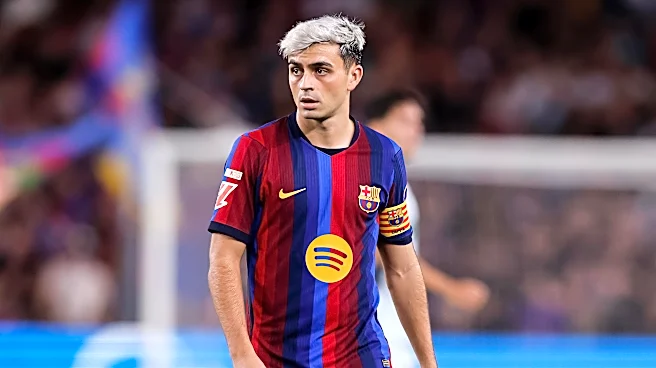
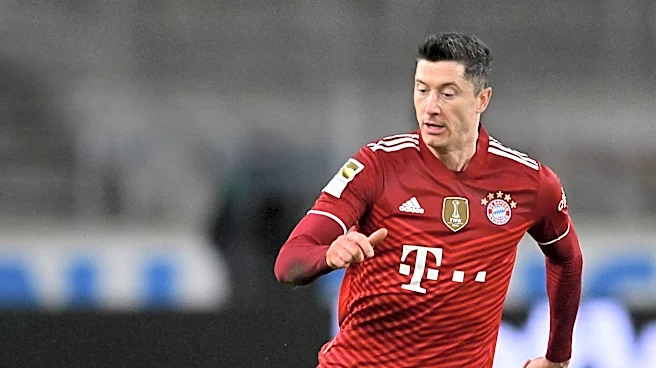
Veteran striker Robert Lewandowski has expressed skepticism about the ability of soccer's current young stars, including Lamine Yamal, Kylian Mbappe, and Erling Haaland, to maintain their elite performance levels for as long as previous generations. Lewandowski,
in an interview with The Athletic's Paul Tenorio, noted that modern players achieve top-tier status much earlier in their careers. He believes this rapid ascent, while showcasing immense talent, might lead to challenges in sustaining dominance over the long term. Yamal, for instance, has rapidly risen through Barcelona's ranks, drawing comparisons to Lionel Messi, while Mbappe and Haaland have become prolific goalscorers for their respective clubs at a young age. Lewandowski suggests that the early access to opportunities and rewards might reduce the patience and gradual development that characterized older generations, potentially impacting their motivation and physical endurance over an extended career.
Why It's Important?
Lewandowski's perspective highlights a significant debate within professional sports regarding player development, career longevity, and the pressures of modern soccer. His comments suggest a potential shift in how elite careers might unfold, impacting club strategies for player management, contract negotiations, and long-term team building. If young stars burn out faster, clubs might need to rethink investment in youth academies and player welfare programs. For the players themselves, it underscores the immense physical and mental demands placed on them from an early age, potentially leading to shorter peak performance windows. This could also influence how fans perceive and engage with these athletes, as the expectation of sustained greatness, often set by legends like Messi and Cristiano Ronaldo, might become increasingly difficult to meet.
What's Next?
The discussion initiated by Lewandowski could prompt further examination within soccer organizations regarding player workload, mental health support, and career management for young talents. Clubs and national teams might explore new strategies to balance early success with long-term sustainability, potentially involving more structured rest periods, advanced sports science, and psychological support. Young players like Yamal, Mbappe, and Haaland will continue to be under intense scrutiny, with their careers serving as case studies for Lewandowski's hypothesis. Their ability to defy these predictions and maintain their elite status for many years will be a key narrative in the coming decade, influencing future generations of athletes and the sport's developmental pathways.
Beyond the Headlines
Lewandowski's remarks touch upon broader societal trends where rapid success and instant gratification are increasingly common. In soccer, this translates to young players achieving global fame and immense wealth before fully maturing, both physically and mentally. This early exposure to the pinnacle of the sport could alter their intrinsic motivation and hunger for continued success, as the traditional 'climb' to the top is significantly shortened. Furthermore, the commercialization of soccer places immense pressure on these young stars to perform consistently, leading to packed schedules and little downtime. This raises ethical questions about the exploitation of young talent and the responsibility of clubs and governing bodies to protect players' long-term well-being beyond their immediate on-field contributions.