




What's Happening?
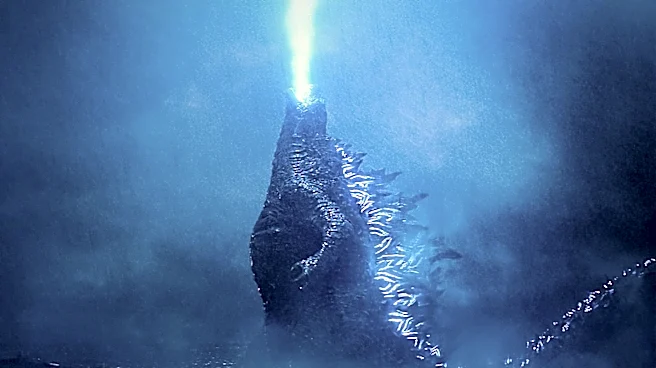
TOHO, a Japanese entertainment studio, has released 'Godzilla Minus Zero,' a direct sequel to its 2023 film 'Godzilla Minus One.' The new film continues the narrative in post-World War II Japan, specifically in 1949, following the aftermath of the war
and a previous Godzilla attack on Tokyo. The story centers on former kamikaze pilot Kōichi and Noriko, a survivor of the earlier Godzilla attack, as they confront a new monster believed to have arrived via a meteor. They reunite with Dr. Kenji Noda, who previously assisted in defeating Godzilla, now serving as the director of the Large-Scale Disaster Response Bureau. The film also introduces new characters, including meteorologist Makoto Aoyama and Hiroshima survivor Kanji, as they work to combat the new threat while monitoring Godzilla's lingering presence. The production maintains the high standards of its predecessor, particularly in its special effects and emotional storytelling, despite a budget under US$20 million.
Why It's Important?
The continued success of TOHO's Godzilla films, particularly 'Godzilla Minus Zero' and its predecessor 'Godzilla Minus One,' highlights a significant trend in the global entertainment industry. These Japanese productions are demonstrating that compelling storytelling and impressive visual effects can be achieved with comparatively modest budgets, challenging the conventional wisdom of Hollywood's blockbuster model. This success could influence U.S. film studios to re-evaluate their production strategies for large-scale monster films, potentially leading to more cost-effective and creatively driven projects. The critical acclaim and audience reception for these films also underscore a global appetite for international cinema, suggesting that U.S. distributors and exhibitors might increasingly look to non-Hollywood productions for diverse and high-quality content. This shift could broaden the types of films available to American audiences and foster greater appreciation for international filmmaking techniques and narratives.
What's Next?
The ongoing success of TOHO's Godzilla franchise, particularly with 'Godzilla Minus Zero,' is likely to solidify the studio's position as a leading producer of monster films. This could lead to further Japanese-produced Godzilla installments, potentially expanding the lore and character development within this universe. For Hollywood, the critical and commercial performance of these films may prompt a re-evaluation of their own approaches to giant monster movies, potentially influencing future production budgets, storytelling techniques, and creative talent choices. The positive reception could also encourage more international collaborations or inspire U.S. studios to invest in original monster franchises that prioritize narrative depth and character development over sheer spectacle. Additionally, the films' success may pave the way for increased distribution of Japanese cinema in the U.S., offering American audiences more diverse cinematic experiences.
Beyond the Headlines
The success of 'Godzilla Minus Zero' and 'Godzilla Minus One' extends beyond mere box office numbers, offering deeper insights into cultural storytelling and cinematic impact. These films, set in post-war Japan, use the iconic monster as a metaphor for national trauma and resilience, particularly in the context of World War II and the atomic bombings. This approach allows for a nuanced exploration of historical events and their psychological aftermath, providing a compelling narrative that resonates with audiences globally. The films' ability to achieve stunning visual effects on a budget significantly smaller than typical Hollywood blockbusters also raises questions about resource allocation and creative efficiency in filmmaking. This could spark discussions within the industry about sustainable production models and the potential for innovation when financial constraints necessitate creative problem-solving, challenging the notion that bigger budgets automatically equate to better films.