





What's Happening?
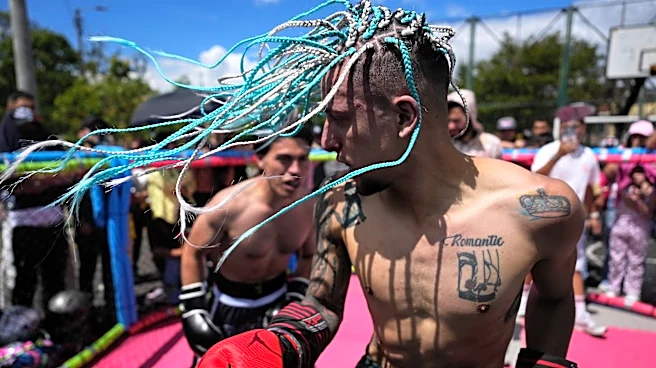
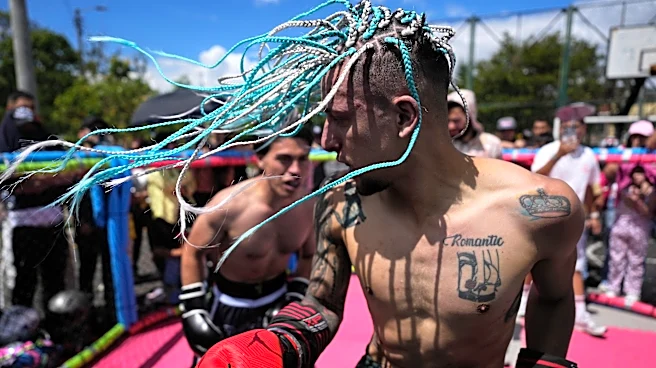
In Bogota, Colombia, Santiago Abril has been organizing unsanctioned street boxing matches in public parks, drawing dozens of young men and women. These pop-up fights, often conducted without official permits, feature participants who pay a fee ($5 for
women, $15 for men) to compete. Abril provides boxing gloves, which are heavier than professional ones to reduce the force of punches, but no headgear. Cash prizes of approximately $100 are awarded to those who win multiple consecutive fights in hastily arranged tournaments. The matches are limited to two 90-second rounds, and participants are sorted into weight categories. Abril states that participants sign a consent form confirming their good health, and he attributes the lack of permits to the difficulty of obtaining them due to the sport being 'monopolized' by promoters. Despite police intervention to dismantle his setups, Abril promotes these events on social media, where he has a significant following.
Why It's Important?
The emergence of unsanctioned street boxing in Bogota highlights a growing trend of informal sports events that operate outside traditional regulatory frameworks. This phenomenon can be seen as a response to perceived barriers in accessing formal sports, such as the 'monopoly' of promoters cited by Abril. While these events offer an accessible platform for individuals to test their skills, seek thrills, or even use boxing as therapy, they also raise significant safety concerns due to the lack of official oversight, medical personnel, and proper protective gear. The potential for serious injuries, despite Abril's use of heavier gloves, remains a risk. Furthermore, the defiance of municipal regulations regarding permits creates a legal gray area, potentially leading to conflicts with authorities and questions about public safety in shared spaces.
What's Next?
The future of these street boxing matches in Bogota remains uncertain. Santiago Abril continues to organize and promote these events through social media, indicating a sustained interest from participants. However, the municipal government has stated that permits and emergency plans are required, and police have already intervened to shut down some of Abril's setups. This suggests an ongoing cat-and-mouse game between organizers and authorities. It is possible that increased police enforcement could lead to more frequent disruptions or even legal action against Abril. Conversely, if the popularity of these events continues to grow, there might be pressure for authorities to either find a way to regulate them safely or for organizers to seek formal pathways for their events, potentially leading to a more structured, albeit still grassroots, boxing scene.
Beyond the Headlines
The rise of street boxing in Bogota reflects broader societal dynamics, including the search for alternative forms of entertainment and community engagement, particularly among younger populations. For some participants, like Ingrid Prieto, boxing serves as a form of therapy, offering an outlet for emotions. For others, it's a chance to experience the adrenaline of combat or earn some quick cash. This informal sports movement also touches upon themes of accessibility and democratization of sports, where individuals bypass established institutions to create their own platforms. However, it also brings to the forefront ethical considerations regarding participant safety, informed consent in unregulated environments, and the responsibility of organizers. The tension between grassroots enthusiasm and regulatory control will likely continue to shape the trajectory of such informal sporting events.