


What's Happening?
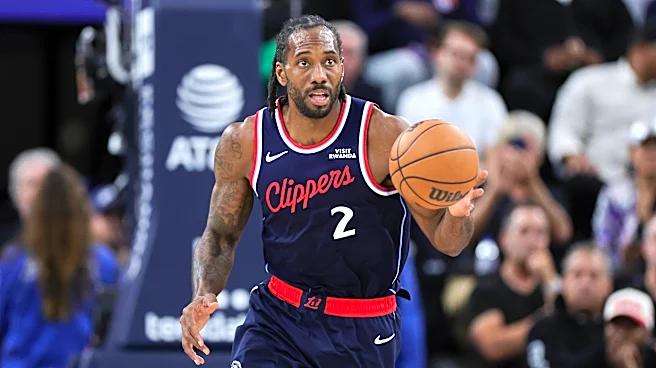
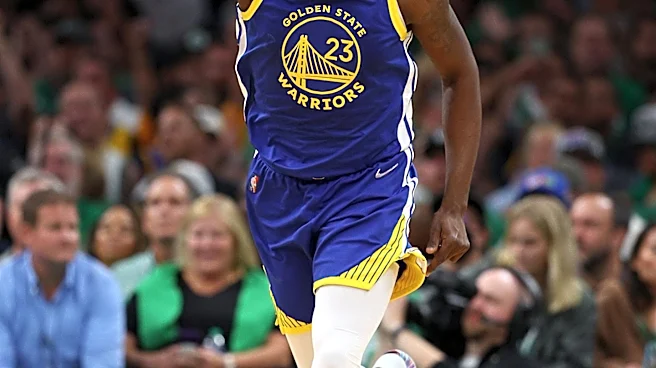
Draymond Green, a forward for the Golden State Warriors, has publicly called for the elimination of the NBA's salary cap. His comments follow the league's decision to fine the Los Angeles Clippers $30 million and strip them of five first-round draft picks.
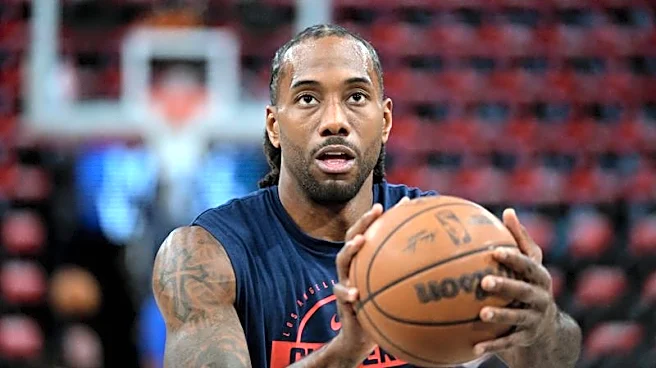
This penalty was imposed after the NBA found that the Clippers facilitated prohibited business deals between player Kawhi Leonard and team sponsors, effectively circumventing salary cap rules. Green argues that the salary cap prevents players from earning their true market value, especially when team owners are selling franchises for billions of dollars. He believes that if an owner is willing to pay a player more, the league should not intervene. Green's stance highlights a broader debate about player compensation and the financial structure of professional sports leagues, suggesting that the current rules restrict athletes' earning potential in a market where team valuations are soaring.
Why It's Important?
Green's call to eliminate the NBA salary cap carries significant implications for the league's economic model and player-owner dynamics. The salary cap was initially implemented to promote competitive balance among teams by limiting spending on player salaries. Removing it could lead to a drastic shift, potentially allowing wealthier franchises to dominate by outspending smaller markets for top talent. This could exacerbate existing disparities, making it harder for teams in less affluent areas to compete for championships. For players, an uncapped system could mean substantially higher earnings for star athletes, aligning their compensation more closely with the massive revenues generated by the league and its franchises. However, it might also create a wider gap between superstar salaries and those of role players. The debate also touches on the ethical considerations of player endorsements and team-facilitated deals, as seen in the Clippers' case, suggesting that current regulations may be seen as restrictive by players seeking to maximize their income.
What's Next?
Draymond Green's advocacy for eliminating the salary cap could ignite further discussions within the National Basketball Players Association (NBPA) and potentially influence future collective bargaining agreement negotiations. The NBPA might leverage Green's arguments to push for reforms that allow players greater financial freedom, possibly including higher salary cap limits or more flexible endorsement rules. The league, however, is likely to resist a complete elimination of the cap, given its stated purpose of maintaining competitive balance. Instead, there might be discussions around adjusting the cap, introducing new mechanisms for player compensation, or refining rules around player-sponsor deals to prevent circumvention while still allowing players to benefit from their market value. The outcome of these discussions could reshape the financial landscape of the NBA, impacting team strategies, player movement, and the overall competitive structure of the league.
Beyond the Headlines
The discussion around the NBA salary cap extends beyond mere financial figures; it delves into fundamental questions of labor economics, fairness, and the nature of professional sports as both entertainment and business. Green's comparison of players to corporate executives, whose compensation is uncapped, highlights a perceived inequity where athletes, despite being the primary drivers of revenue, face artificial limits on their earnings. This perspective challenges the traditional view of sports leagues as entities that must protect competitive balance at all costs, even if it means restricting individual earning potential. The Clippers' fine underscores the tension between league rules and the desire of both teams and players to maximize financial opportunities. This situation could lead to a re-evaluation of how player value is defined and compensated in a rapidly evolving sports economy, potentially influencing other professional leagues to reconsider their own financial structures and player compensation models.