



What's Happening?
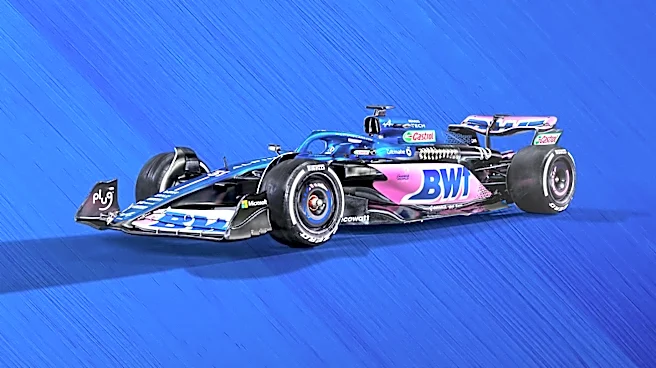
Franco Colapinto, an Argentine Formula 1 driver for Alpine, has provided an optimistic update regarding the development of the team's 2027 car. Colapinto revealed that he has already tested components of the future vehicle in a simulator, reporting positive
sensations. While acknowledging the inherent difficulty in precisely quantifying Alpine's progress relative to competitors, he expressed confidence that the new car would represent a significant qualitative leap. Colapinto anticipates that the 2027 regulations will allow for substantial improvements, enabling the team to address previous issues more effectively with a new package. He believes the car is moving in the desired direction, aiming to resolve problems that were challenging to fix with current setups. Despite the focus on future development, Colapinto emphasized the team's commitment to the remaining races of the current season, aiming to score points and maintain motivation.
Why It's Important?
This development is significant for Alpine and the broader Formula 1 landscape. A strong performance from Alpine in 2027 could alter the competitive dynamics of the sport, potentially allowing them to challenge leading teams more consistently. For Colapinto, a successful 2027 car could elevate his career trajectory, providing him with a more competitive platform to showcase his skills. The emphasis on a 'qualitative leap' suggests Alpine is aiming for more than incremental improvements, indicating a strategic shift that could impact their long-term standing in the constructors' championship. The cautious optimism also reflects the high stakes involved in new regulation cycles, where teams invest heavily in design and engineering, hoping to gain a competitive edge that can last for several seasons. The success of these early development phases is crucial for future on-track performance and commercial viability.
What's Next?
Alpine will continue its intensive development program for the 2027 car, with further simulator tests and eventual physical component testing expected. Colapinto and the team will also focus on the remaining races of the current Formula 1 season, aiming to secure as many points as possible despite the challenging gap to competitors like Racing Bulls. The feedback from drivers like Colapinto will be critical in refining the design and engineering of the 2027 vehicle. As the 2027 regulations draw closer, other teams will also be progressing with their own development, setting the stage for a highly competitive new era in Formula 1. The coming months will likely see more detailed announcements from Alpine regarding their technical progress and strategic direction for the upcoming regulatory changes.
Beyond the Headlines
The early positive feedback on Alpine's 2027 car highlights the continuous innovation and long-term planning inherent in Formula 1. Teams often work years in advance on new car designs, especially when significant regulatory changes are on the horizon. This forward-looking approach underscores the immense financial and human capital investment required to compete at the pinnacle of motorsport. The 'unknown' factor Colapinto mentioned—that other teams might make even bigger leaps—reflects the high-stakes nature of F1 development, where competitive advantage is fleeting and constant evolution is necessary. This also touches upon the ethical considerations of resource allocation, balancing current season performance with future competitiveness. The pursuit of a 'qualitative leap' signifies a strategic gamble that could either propel Alpine to the front or leave them behind if their rivals' advancements are more substantial.