




What's Happening?
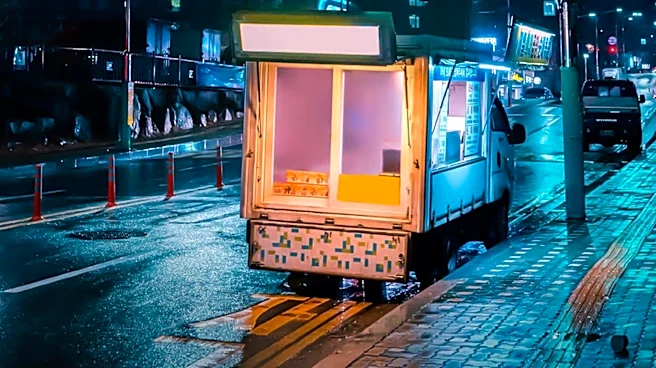
Aurora lawmakers are being advised to exercise caution before implementing intensive new regulations on food trucks, despite some concerns about congestion. Food trucks have become a significant part of Aurora's cultural and gastronomic landscape, contributing
nearly $398,000 in sales-tax revenue to the city so far this year. The city already has existing regulations covering business licenses, state food-truck licenses, county health inspections, and fire safety checks by the Aurora Fire Department. Current rules also dictate that trucks cannot park within 175 feet of a restaurant without permission and must remain 50 feet from residences, operating between 7 a.m. and 10 p.m. Critics of new regulations argue that many concentrations of food trucks, particularly on large commercial properties, are decisions that should remain with private property owners rather than being subjected to arbitrary density limits from the city.
Why It's Important?
The debate over food truck regulations in Aurora highlights a critical tension between supporting entrepreneurial growth and addressing localized concerns about congestion or competition. Food trucks serve as a vital entry point into the restaurant business for many entrepreneurs who lack the capital for brick-and-mortar establishments, fostering economic diversity and opportunity. The substantial sales-tax revenue generated by these businesses underscores their positive economic impact on the city. Imposing additional, intensive regulations could stifle this entrepreneurial spirit, making it harder for small businesses to thrive and potentially reducing the variety of culinary options available to residents. This situation also touches on the broader principle of government intervention in the free market, questioning whether the city should regulate private property usage beyond existing health and safety standards, especially when the market itself is effectively creating vibrant community spaces and generating revenue.
What's Next?
Aurora lawmakers will need to carefully consider the balance between addressing community concerns and supporting the economic contributions of food trucks. The current discussion suggests a need for a nuanced approach, focusing on enforcing existing health, safety, and licensing requirements rather than introducing broad new restrictions. Stakeholders, including food truck operators, restaurant owners, and community members, will likely continue to voice their perspectives as the city deliberates. The outcome could influence the future landscape of Aurora's dining scene and its approach to small business development. If new regulations are pursued, they could face opposition from entrepreneurs and advocates for economic growth. Conversely, a decision to maintain the current regulatory framework, with a focus on enforcement, could further encourage the growth of the food truck industry and its associated economic benefits for the city.
Beyond the Headlines
The discussion surrounding food truck regulations in Aurora reflects a deeper societal conversation about the role of entrepreneurship, urban planning, and community spaces in modern cities. Food trucks are not just mobile kitchens; they are often catalysts for community gathering, transforming underutilized spaces into vibrant social hubs. This phenomenon challenges traditional notions of commercial development and public space, prompting cities to reconsider how they integrate informal economies into their urban fabric. The debate also touches on the concept of 'placemaking'—how communities create inviting public spaces—and the extent to which local government should control organic, market-driven developments. The outcome in Aurora could set a precedent for how other cities manage the growth of mobile businesses, influencing policies that balance economic opportunity, public enjoyment, and regulatory oversight in an evolving urban landscape.