






What's Happening?
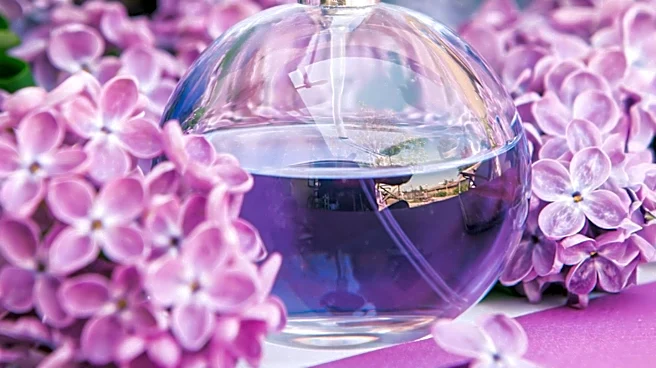
Modern violet fragrances are gaining popularity, with many positioned as genderless and specifically targeting a younger demographic, according to fragrance expert Eudora Nwasike. This trend marks a departure from traditional, often cloying, violet scents
of the past. Nwasike explains that after years of heavy gourmand fragrances, consumers are seeking softer, fresher, and more interesting options. The new violet formulations lean on the leaf, providing green and watery notes, often grounded with woods or toasty elements, making them less 'ladylike' and more of a 'skin scent.' This shift aligns with Gen Z's interest in reviving old-school products with a contemporary twist.
Why It's Important?
The emergence of genderless violet fragrances, as noted by Eudora Nwasike, signifies a significant shift in the U.S. beauty and fragrance industry. This trend reflects evolving consumer preferences, particularly among younger generations, who are increasingly seeking products that defy traditional gender classifications. For fragrance companies, this presents an opportunity to innovate and expand their product lines, appealing to a broader and more diverse customer base. Brands that successfully adapt to this demand for gender-neutral scents can gain a competitive edge, while those that cling to outdated gendered marketing may lose market share. This movement also influences retail strategies, encouraging a more inclusive approach to product display and promotion, moving away from strictly 'men's' or 'women's' sections in stores.
What's Next?
The success of modern, genderless violet fragrances, as highlighted by Eudora Nwasike, suggests a continued expansion of gender-neutral options within the fragrance market. Other traditional floral notes, such as iris, are predicted to undergo similar modern revamps to appeal to contemporary tastes. Fragrance brands are likely to invest further in research and development to create innovative formulations that blend traditional elements with modern, versatile accords. This trend could also influence packaging and marketing, with a greater emphasis on minimalist designs and inclusive messaging that resonates with a diverse consumer base. The broader beauty industry may also see an increased focus on genderless products across various categories, driven by consumer demand for inclusivity and personal expression.
Beyond the Headlines
The rise of genderless violet fragrances, as discussed by Eudora Nwasike, reflects a deeper cultural shift towards challenging and dismantling traditional gender norms. This trend in the fragrance industry is part of a larger societal movement where individuals are increasingly rejecting binary classifications and embracing fluidity in identity and expression. Ethically, it promotes inclusivity and self-acceptance, allowing consumers to choose scents based on personal preference rather than prescribed gender roles. This development also has economic implications, as it encourages brands to rethink their marketing strategies and product development to cater to a more diverse and discerning consumer base. Culturally, it contributes to a broader dialogue about gender equality and representation, influencing how products are perceived and consumed in a progressively inclusive society.