





What's Happening?
Stellantis has announced its acquisition of the remaining stake in its Indian joint venture from CK Birla Group. This move grants Stellantis complete ownership of its manufacturing operations at Thiruvallur, Tamil Nadu, previously held by Hindustan Motor
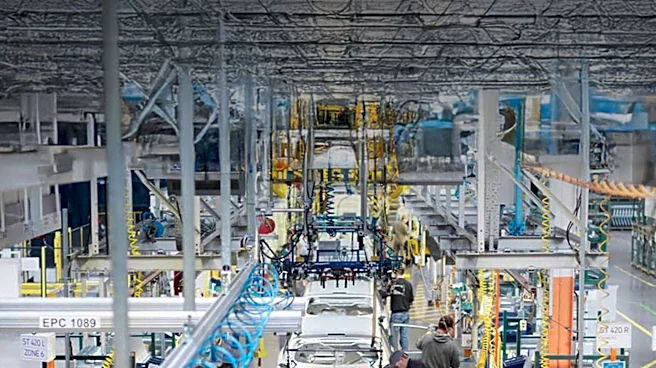
Finance Corporation Limited (HMFCL). The transaction, funded through foreign direct investment, consolidates Stellantis's ownership of Stellantis Automobiles India Private Limited (SAIPL). While financial terms were not disclosed, Stellantis views India as a strategic market, emphasizing that full ownership will provide a simplified governance structure, greater operational flexibility, and stronger alignment with the company's global priorities. The joint venture, established in 2017, began manufacturing at the Thiruvallur plant in 2021, producing models like the Citroën C3, ë-C3, C3 Aircross, and Basalt with over 95% localization. Stellantis India CEO and managing director Shailesh Hazela stated that the company has invested close to $1.14 billion in India to build a robust manufacturing, engineering, and export ecosystem, seeing significant opportunities ahead.
Why It's Important?
This strategic acquisition by Stellantis underscores the growing importance of the Indian automotive market in global manufacturing and export strategies. By taking full control, Stellantis can streamline decision-making processes and more effectively integrate its Indian operations into its worldwide network. This move is expected to accelerate growth, strengthen export capabilities, and deepen local investments, potentially leading to increased production volumes and job creation. The company plans to boost output at the Thiruvallur plant by over 160%, from 16,000 units in 2026 to more than 43,000 units annually by 2028. This expansion will also lead to a significant increase in the direct workforce, which is projected to more than double from its current 610 employees. The focus on exports, projected to constitute about 60% of the increased output, highlights India's emerging role as a manufacturing hub for global markets, while the remaining 40% will cater to the domestic market, indicating confidence in India's internal demand.
What's Next?
Following the acquisition, Stellantis is poised to implement its plans for accelerated growth and increased production at the Thiruvallur plant. The company anticipates a substantial increase in manufacturing output, aiming for over 43,000 units annually by 2028, up from 16,000 units in 2026. This expansion will necessitate a significant increase in the workforce, with plans to more than double the current 610 direct employees. Stellantis will likely focus on leveraging its enhanced operational flexibility to optimize production processes and supply chains. Furthermore, the company is expected to strengthen its export initiatives, with approximately 60% of the increased output earmarked for international markets across four continents. Domestically, Stellantis will continue to deepen local investments and potentially introduce new product offerings to cater to the Indian market, reinforcing its commitment to India as a key pillar of its growth strategy.
Beyond the Headlines
The full acquisition of its Indian joint venture by Stellantis reflects a broader trend of multinational automotive corporations consolidating their control over key manufacturing assets in emerging markets. This strategy allows for greater vertical integration, tighter quality control, and more efficient resource allocation, which are crucial in a highly competitive global automotive landscape. The emphasis on high localization levels (over 95%) for models produced in India not only reduces manufacturing costs but also fosters local industrial development and job creation, contributing to the 'Make in India' initiative. This move could also set a precedent for other foreign investors in India, signaling confidence in the country's manufacturing capabilities and its potential as an export base. The increased focus on exports from India could also lead to a diversification of global supply chains for Stellantis, reducing reliance on single-region production and enhancing resilience against geopolitical or economic disruptions.