






What's Happening?
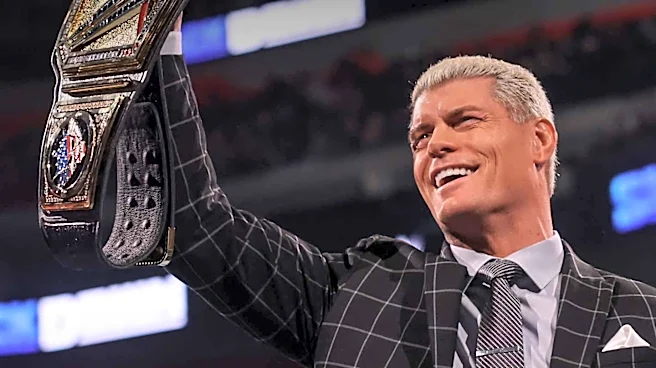
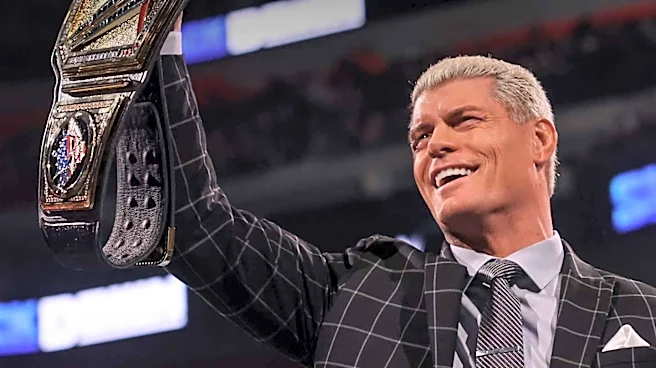
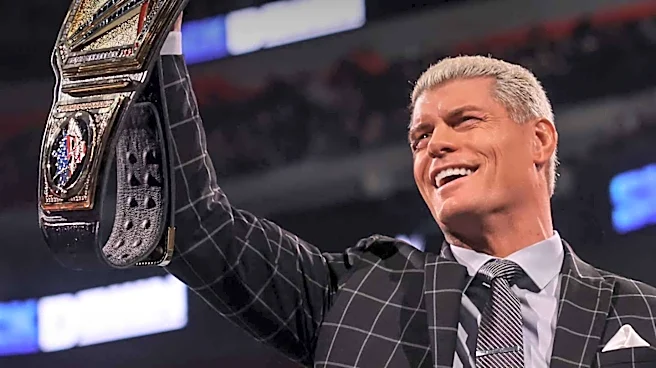
Cody Rhodes' career trajectory, particularly his transition from All Elite Wrestling (AEW) back to WWE, has sparked discussions regarding his suitability for each promotion. Many observers suggest that Rhodes is a better fit for WWE due to its corporate
structure and historical narrative, which allows his heroic persona to contrast effectively with the company's established 'heel' corporate character. In AEW, Rhodes' earnest, American bravado reportedly clashed with a fanbase that sought more nuanced characters and storylines. His inability to pursue the AEW World Championship due to a contractual stipulation, combined with a perceived lack of self-awareness regarding his real-life position as a founding member of AEW, created a disconnect with the audience. This led to a 'Codyverse' in the mid-card that fans found less compelling compared to his current role in WWE, where his quest for the WWE Championship against the backdrop of his father's legacy resonates deeply.
Why It's Important?
This analysis of Cody Rhodes' career highlights the critical differences in creative philosophies and audience expectations between major professional wrestling promotions like AEW and WWE. It underscores how a wrestler's character and storyline can either thrive or falter depending on the organizational context and the narrative framework provided. For AEW, Rhodes' departure and subsequent success in WWE serve as a case study in character development and audience perception, potentially influencing how the company crafts its future narratives and positions its talent. For WWE, Rhodes' impactful return demonstrates the power of leveraging historical context and established corporate narratives to elevate a performer, reinforcing its brand identity and drawing power. The discussion also reflects broader trends in professional wrestling, where the blending of kayfabe (fictional storyline) and reality plays a significant role in audience engagement.
What's Next?
Cody Rhodes is expected to continue his prominent role in WWE, likely pursuing top-tier championships and main event storylines, capitalizing on the narrative momentum built around his quest to win the title his father never held. For AEW, the insights gained from Rhodes' tenure may influence future booking decisions, particularly concerning how founding members or top talent are presented and how their real-life roles within the company are integrated into their on-screen characters. Both promotions will likely continue to refine their approaches to character development and storytelling, aiming to create compelling narratives that resonate with their respective fan bases. The ongoing competition between AEW and WWE will likely see both companies striving to sign and retain talent that best fits their unique brand and creative vision.
Beyond the Headlines
The differing experiences of Cody Rhodes in AEW and WWE illuminate the evolving nature of professional wrestling storytelling. Modern wrestling often blurs the lines between kayfabe and reality, requiring performers to navigate their on-screen characters with an awareness of their real-life circumstances. Rhodes' situation in AEW, where his real-life power as a founder conflicted with his on-screen struggles, exemplifies this challenge. In contrast, WWE's long-standing corporate identity provides a clear antagonist for a heroic figure like Rhodes, allowing for a more straightforward and universally understood narrative of overcoming adversity. This dynamic suggests that the most successful wrestling characters in the current era are those that effectively integrate or acknowledge the performer's real-world standing within the fictional narrative, creating a more believable and engaging experience for the audience.