




What's Happening?
Many traditional beauty practices and household staples are proving to be highly effective, often outperforming modern, expensive products. For instance, placing one's face in a bowl of ice water for short intervals can de-puff, tighten pores, and energize
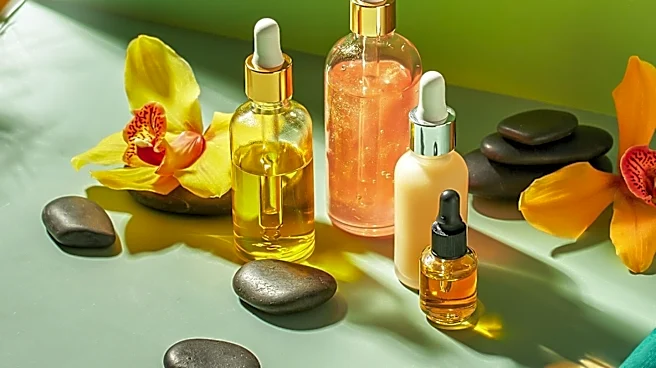
the skin without the need for specialized devices. Pond's Cream, a long-standing multipurpose moisturizer, continues to be favored for its reliable hydration and ability to double as a makeup remover. Vaseline is highlighted for its ability to extend the wear of perfume when applied to pulse points before spraying. Bio-Oil has maintained its reputation for over 35 years as a trusted solution for scars, dry patches, and stretch marks. Additionally, sleeping on silk pillowcases or with silk scarves can prevent hair frizz and breakage, particularly for curly and textured hair. Velcro rollers are making a comeback for achieving bouncy volume without excessive heat styling, and applying castor oil to eyelashes and eyebrows at night can promote length and thickness over time.
Why It's Important?
This resurgence of traditional beauty hacks and reliance on simple, affordable products signifies a shift in consumer behavior within the U.S. beauty market. It challenges the prevailing narrative that expensive, high-tech solutions are always superior, suggesting that consistency and simplicity can often yield better results. This trend has significant implications for the beauty industry, potentially leading to a re-evaluation of product development and marketing strategies. Consumers, increasingly skeptical of exaggerated claims and high price points, are seeking value, efficacy, and transparency. The emphasis on readily available, multi-purpose items like Vaseline and castor oil could reduce demand for niche, single-use products, impacting sales and innovation in certain segments. Furthermore, this movement promotes a more sustainable approach to beauty by encouraging the use of fewer products and reducing waste, aligning with growing environmental consciousness among U.S. consumers.
What's Next?
The continued popularity of these traditional beauty methods could lead to several developments. Beauty brands might start incorporating these 'old-school' ingredients or techniques into their new product lines, marketing them with a focus on natural efficacy and simplicity. There could also be an increase in educational content from beauty influencers and publications promoting DIY solutions and cost-effective alternatives. Retailers might adjust their inventory to feature more of these classic, affordable staples prominently. This trend could also foster a greater appreciation for intergenerational knowledge sharing, as consumers look to their elders for proven beauty wisdom. Ultimately, the beauty industry may see a diversification of offerings, with a stronger emphasis on foundational, effective ingredients and practices rather than solely on novel, complex formulations, catering to a consumer base that values both tradition and practicality.
Beyond the Headlines
Beyond the immediate impact on beauty routines, the embrace of traditional hacks reflects a deeper societal yearning for authenticity and a rejection of over-consumption. In an era saturated with marketing and new product launches, the return to basics can be seen as a form of resistance against commercial pressures. It highlights a desire for tangible results and a connection to practices that have stood the test of time, fostering a sense of trust that modern innovations sometimes lack. This movement also touches upon economic accessibility, making effective beauty solutions available to a wider demographic regardless of income level. Ethically, it promotes a more mindful approach to self-care, encouraging individuals to understand the fundamental principles of skin and hair health rather than relying on quick fixes. Culturally, it reinforces the value of inherited wisdom and the idea that sometimes, the simplest solutions are indeed the best, fostering a sense of empowerment through knowledge and self-reliance.