




What's Happening?
Rheinmetall, a German defense contractor, has revised its revenue target for 2030 from €45 billion to a range of €33-37 billion. This adjustment was announced during the company's Capital Markets Day in Düsseldorf on November 27, 2026. CEO Armin Papperger
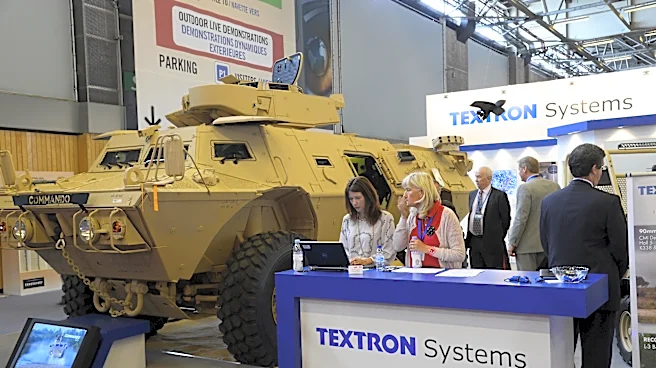
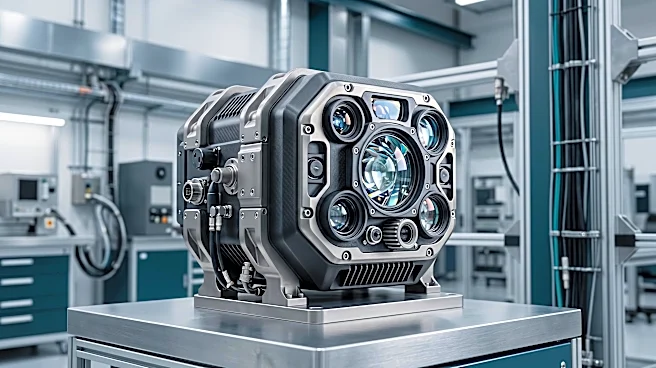
cited production delays and ongoing price negotiations for armored vehicles with the German government as primary reasons for the revised outlook. Despite the overall reduction, Rheinmetall is significantly accelerating its focus on the Air Defence division. This segment is projected to quadruple its turnover from €0.8 billion in 2025 to €3-3.5 billion by 2030, with profit margins expected to exceed 20%. The company plans to invest in close-range defense systems, including automated cannons like the Skyranger 30 mobile system and Skynex fixed batteries, which integrate sensors developed by Rheinmetall Italia. Additionally, laser weapons, having successfully passed stress tests in 2026, are a key part of this strategy, aimed at protecting critical infrastructure such as airports and energy networks. The company's stock saw a 3% increase on the Frankfurt Stock Exchange following these announcements.
Why It's Important?
This strategic shift by Rheinmetall highlights a broader trend in global defense priorities, driven by evolving warfare scenarios, particularly the increased use of drones and hybrid attacks. The company's emphasis on air defense systems, including anti-drone technology and laser weapons, reflects a critical need to counter cost-effective aerial threats that traditional missile defense systems find unsustainable. The substantial investment in this division, with projected quadrupled revenue, indicates a strong market demand for advanced air defense solutions. This move could influence defense procurement strategies globally, as nations seek more efficient and effective ways to protect their assets from modern threats. The focus on automated systems and laser technology also signals a move towards more technologically advanced and potentially cost-efficient defense mechanisms in the long term. For the U.S. defense industry, this could mean increased competition or opportunities for collaboration in developing and deploying similar advanced air defense capabilities.
What's Next?
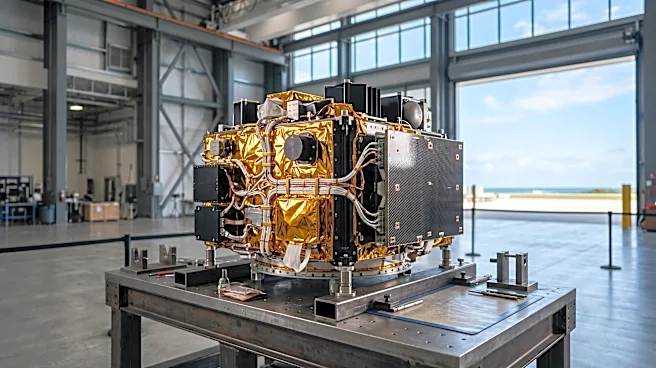
Rheinmetall's immediate next steps involve executing its accelerated strategy for the Air Defence division, including further development and deployment of systems like Skyranger 30, Skynex, and laser weapons. The company will also continue negotiations with the German government regarding armored vehicle pricing and delivery schedules. The increased production capacity for artillery in Eastern Europe, aiming for one million shells annually, suggests a sustained focus on conventional munitions alongside advanced air defense. Furthermore, the development of the SATCOMBw Phase 4 satellite constellation through the OHB Rheinmetall Space Networks joint venture indicates a long-term commitment to digital systems and space-based defense capabilities, with operations expected to begin in 2029. The company's participation in bids for the new American XM30 armored vehicle also points to its continued interest in expanding its presence in the U.S. defense market. Market reactions will likely continue to monitor the progress of these strategic initiatives and their impact on Rheinmetall's financial performance.
Beyond the Headlines
The revised strategy by Rheinmetall underscores a fundamental shift in military engagement economics, where the low cost of offensive drones makes traditional interceptor missiles economically unfeasible. This asymmetry is driving innovation towards more cost-effective defensive measures, such as automated cannons and laser systems. The emphasis on protecting civilian infrastructure like airports and energy grids also highlights a growing concern for national security beyond traditional military targets, reflecting the broader impact of modern warfare on civilian life. The integration of Italian radar technology and the potential for new Panther tanks for the Italian Army demonstrate the interconnectedness of European defense industries and the importance of international collaboration in developing advanced military capabilities. This strategic pivot could also spur further research and development in AI-driven defense systems and autonomous warfare, as the industry moves towards solutions where 'steel meets software.'