









What's Happening?
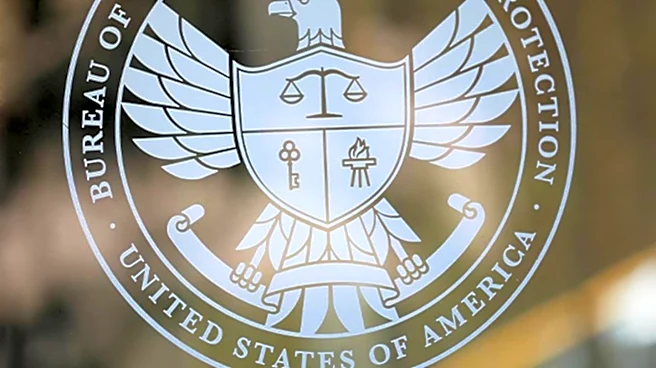
The Consumer Financial Protection Bureau (CFPB) has released its latest semi-annual report to Congress, detailing substantial shifts in federal consumer financial oversight. The report, covering activities primarily from January to June 2026, highlights
the closure of over 1,300 supervisory actions, a reduction in examinations, and a revised enforcement strategy. The CFPB's new approach emphasizes addressing actual, measurable consumer harm rather than hypothetical or speculative injury. This includes ensuring due process, encouraging voluntary remediation from financial institutions, and avoiding duplicative enforcement efforts. For instance, the Bureau worked with Bilt to secure over $250,000 in consumer redress for more than 2,000 affected consumers. The CFPB also closed 86% of its outstanding supervisory actions and reduced scheduled examinations by approximately 50%. Additionally, the agency implemented changes to its consumer complaint system, including requiring attestations for credit reporting complaints and ceasing the publication of unverified complaint narratives.
Why It's Important?
These changes by the CFPB signify a notable recalibration of consumer financial protection in the U.S. The shift towards prioritizing actual, measurable consumer harm could lead to more targeted and potentially fewer enforcement actions against financial institutions, impacting compliance costs and regulatory burdens. Financial companies may find more opportunities for voluntary remediation and cooperation with the CFPB, potentially reducing the likelihood of public enforcement actions. However, areas like debt collection, credit reporting, and fraudulent fees remain high-priority enforcement targets. The modifications to the consumer complaint system aim to improve data reliability, which could affect how companies manage and respond to consumer grievances. This new framework could alter the landscape for both consumers, who might see a more focused approach to their grievances, and financial institutions, which will need to adapt to the CFPB's revised supervisory and enforcement priorities.
What's Next?
The CFPB's new approach is expected to continue shaping federal consumer financial oversight. Financial institutions will likely need to adjust their compliance strategies to align with the Bureau's emphasis on actual consumer harm and voluntary remediation. The ongoing litigation against entities like United Debt Holding, JTM Capital Management, Experian, and Strategic Financial Solutions indicates that the CFPB will maintain its focus on specific areas of concern, particularly in debt collection, debt relief, and credit reporting. The changes to the consumer complaint system will require consumers to follow new procedures for submitting certain complaints, potentially affecting the volume and nature of reported issues. The Bureau's commitment to its 'Humility in Supervision Pledge' suggests a more collaborative, yet still vigilant, regulatory environment moving forward.
Beyond the Headlines
The CFPB's revised strategy could have deeper implications for the balance between consumer protection and regulatory burden. By focusing on 'actual, measurable consumer harm,' the Bureau might be setting a higher bar for intervention, potentially leading to debates about the scope of consumer protection and the agency's role. The move away from publishing unverified complaint narratives, while intended to improve reliability, could also be perceived as reducing transparency for the public. This shift could influence how consumer advocacy groups operate and how the public perceives the effectiveness of consumer financial safeguards. The emphasis on cooperation and voluntary remediation could foster a more collaborative relationship between regulators and financial institutions, but it also raises questions about the potential for reduced accountability in cases where harm is less immediately quantifiable or widespread.