





What's Happening?
Lex Marie, a multidisciplinary artist based in Washington, D.C., is gaining attention for her artwork that explores the theme of discipline within Black households. Her work, which has gone viral on platforms like TikTok and Instagram, uses belts as a central
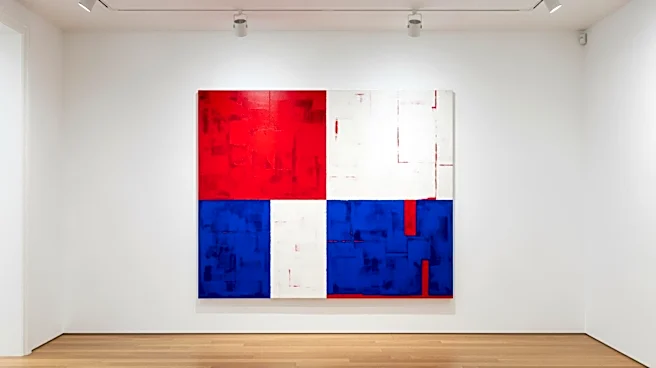
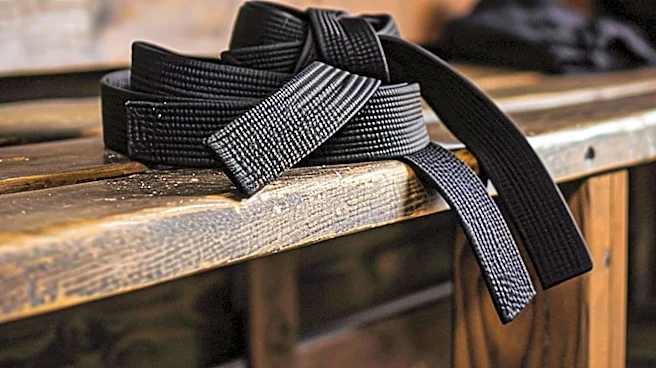
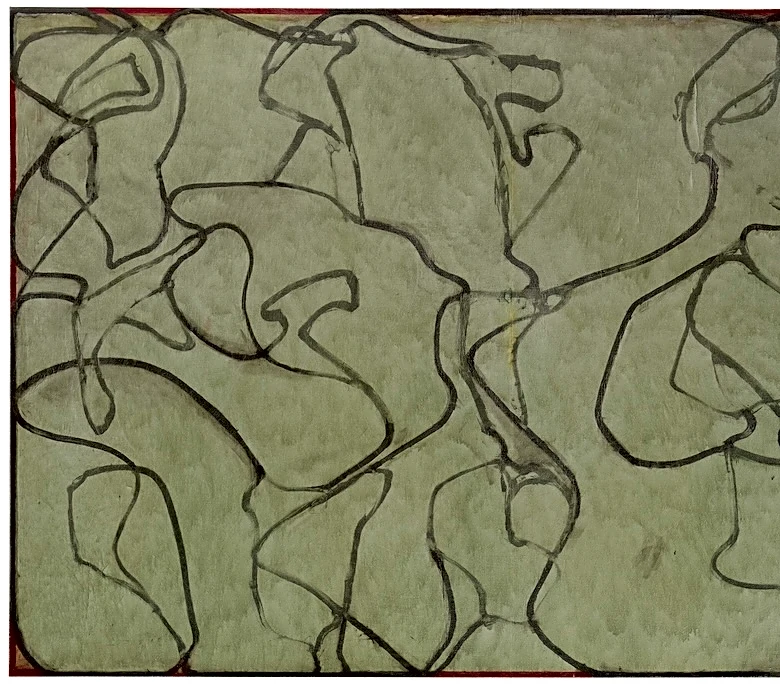
motif to critique and discuss the historical and cultural aspects of corporal punishment. Marie's art pieces, such as 'Watch Your Tone' and 'Because I Love You,' incorporate belts dipped in paint to create marks on canvases, symbolizing the physical and emotional scars of discipline. The artist aims to open a dialogue about the legacy of corporal punishment, particularly its roots in the history of slavery and its evolution in modern parenting practices. Marie's work is deeply personal, drawing from her experiences as a mother and her reflections on her own childhood.
Why It's Important?
The significance of Lex Marie's work lies in its ability to spark conversations about a sensitive and often overlooked topic. By addressing the historical context of corporal punishment in Black households, Marie's art challenges viewers to reconsider traditional disciplinary practices and their impact on children. This dialogue is particularly relevant in the context of ongoing discussions about racial justice and the legacy of slavery in the United States. The reactions to her work, ranging from gratitude to defensiveness, highlight the complexity of the issue and the need for a broader societal conversation. Marie's art not only provides a platform for personal reflection but also encourages a communal reimagining of discipline that affirms human dignity and the value of Black lives.
What's Next?
Lex Marie plans to expand her series of artworks, with nearly 20 pieces already created and more in development for a planned exhibition in the fall. Her work will be showcased in a solo show at The Bishop gallery in Brooklyn, New York. As her art continues to gain visibility, it is likely to provoke further discussions and potentially influence how discipline is perceived and practiced within Black communities. The ongoing dialogue may also inspire other artists and cultural commentators to explore similar themes, contributing to a broader movement towards restorative justice and community-centered approaches to parenting.
Beyond the Headlines
Marie’s work delves into the ethical and cultural dimensions of discipline, questioning the normalization of physical punishment and its long-term effects on individuals and communities. By using art as a medium for storytelling and healing, Marie offers a unique perspective on childhood trauma and resilience. Her approach aligns with contemporary movements that seek to address historical injustices and promote healing through creative expression. The conversation her art initiates could lead to a reevaluation of parenting practices and a shift towards more compassionate and understanding methods of discipline.