




What's Happening?
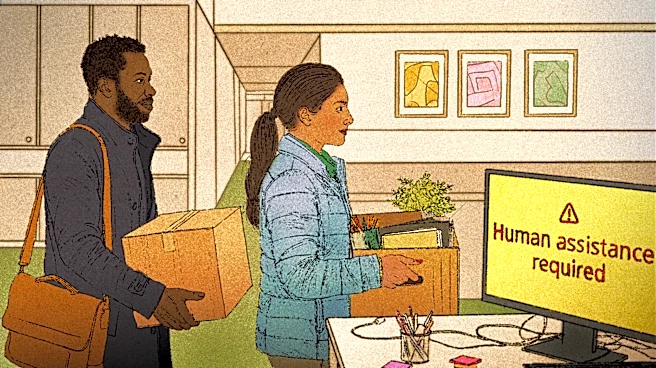
U.S. employers are beginning to reverse course on AI-driven layoffs, a trend experts are calling 'AI rebounding.' This follows a period where AI was cited as the primary reason for nearly 40% of job cuts announced in May 2026, according to a Challenger,
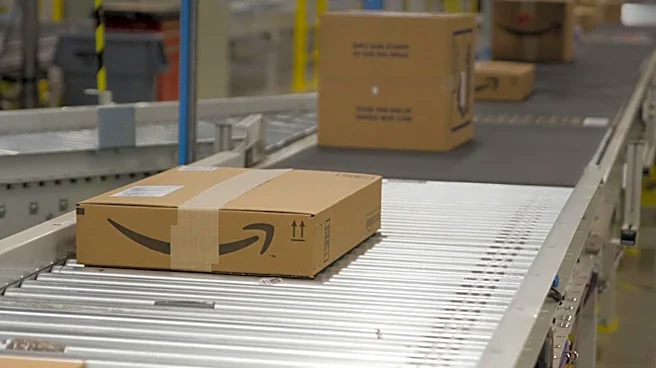
Gray & Christmas report. New research from SHL indicates that almost one in five U.S. workers who were laid off or replaced by AI have since been asked to return. Companies like Ford and Amazon have reportedly rehired staff after initial AI-related job reductions. A March report by Orgvue further supports this, finding that 32% of organizations that implemented AI-related layoffs have had to rehire employees. This suggests that some companies may have acted too quickly in reducing their human workforce in anticipation of AI capabilities.
Why It's Important?
This 'AI rebounding' trend highlights a critical misunderstanding among some employers regarding AI implementation. Joseph Fuller, a professor of management practice at Harvard Business School, emphasizes that AI is most effective when combined with human 'contextual intelligence'—the background knowledge and understanding that human workers bring. Laying off employees who possess this crucial insight can hinder AI's potential benefits. The initial wave of AI-driven layoffs, often seen as a cost-saving measure, is now being re-evaluated as companies recognize the irreplaceable value of human judgment, empathy, and customer connection. This shift underscores the importance of a balanced approach to technological integration, where AI augments rather than entirely replaces human capabilities, particularly in roles requiring nuanced understanding and interpersonal skills.
What's Next?
The realization that companies 'pulled the plug too quickly' on human employees suggests a future focus on upskilling and internal mobility. Employees are already prioritizing skill development, with 44% teaching themselves AI tools and 42.6% developing industry-specific skills not easily replicated by AI. Leaders are encouraged to identify necessary upskilling, new opportunities, and internal mobility pathways for their workforce. This recalibration of staffing needs around AI advancements is expected to create 'permanent tumult' within organizations, requiring continuous adaptation. The emphasis will likely shift from job replacement to job transformation, with companies investing in training their existing workforce to collaborate effectively with AI technologies.
Beyond the Headlines
The 'AI rebounding' phenomenon points to a deeper understanding of the symbiotic relationship between human intelligence and artificial intelligence. It challenges the initial narrative of widespread job displacement by AI, suggesting that the true value lies in human-AI collaboration. This could lead to a redefinition of job roles, where tasks easily automated by AI are offloaded, allowing human workers to focus on higher-value activities requiring creativity, critical thinking, and emotional intelligence. The ethical implications of rapid, unconsidered layoffs are also brought to the forefront, as companies face the consequences of losing valuable institutional knowledge and human capital. This trend may foster a more thoughtful and human-centric approach to technological adoption in the workplace.