







What's Happening?
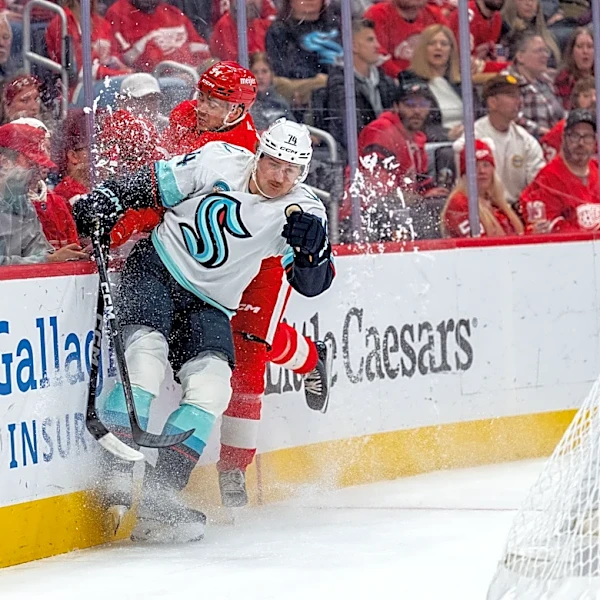
The Arizona Coyotes played their final game in the Valley on April 17, 2024, concluding a 28-year presence in Arizona. The team secured a 5-2 victory against the Edmonton Oilers in front of a sold-out crowd of 4,600 fans at Mullett Arena in Tempe. Following
the game, the team acknowledged their fans. The relocation to Salt Lake City, Utah, for the 2024-25 season, where they will become the Utah Hockey Club and eventually the Utah Mammoth, was prompted by the team's inability to secure a permanent arena solution in Arizona. Ryan and Ashley Smith purchased the team from Alex Meruelo to facilitate this move. The franchise, originally the Winnipeg Jets, moved to Phoenix in 1996 after a plan to relocate to Minnesota fell through, hosting its first game at America West Arena on October 10, 1996.
Why It's Important?
The departure of the Arizona Coyotes marks a significant shift for the National Hockey League (NHL) and the sports landscape in Arizona. For nearly three decades, the Coyotes fostered a hockey community in a non-traditional market, demonstrating the sport's potential for growth beyond its traditional strongholds. The relocation highlights the critical importance of stable infrastructure, particularly a dedicated arena, for professional sports franchises. While the team's absence is a loss for local fans, the enduring legacy of the Coyotes is evident in the continued vitality of youth hockey programs, alumni events, and former players coaching in the Valley. This situation underscores the economic and social impact professional sports teams have on their host cities, including job creation, local business support, and community identity. The move to Utah also signifies the NHL's strategic expansion and adaptation to new markets, potentially opening up new fan bases and revenue streams for the league.
What's Next?
Following the relocation, the former Arizona Coyotes will begin their new chapter as the Utah Hockey Club in Salt Lake City for the 2024-25 season, with plans to eventually be named the Utah Mammoth. In Arizona, the focus will shift to sustaining the existing hockey community and potentially attracting a future NHL franchise. The continued engagement of former Coyotes players and the growth of youth hockey programs suggest a resilient foundation for the sport in the state. Stakeholders in Arizona may explore new arena development opportunities or other initiatives to demonstrate the market's viability for professional hockey in the long term. The NHL will closely monitor the success of the new Utah franchise, which could influence future expansion or relocation decisions for other teams facing similar facility challenges.
Beyond the Headlines
The relocation of the Arizona Coyotes transcends a simple team move; it reflects broader challenges and opportunities within professional sports. The struggle to secure a permanent arena solution in Arizona highlights the complex interplay between team ownership, municipal governments, and real estate development. This situation also brings to light the emotional connection fans have with their local teams, as evidenced by the difficulty experienced by fans, families, and former players. The continued engagement of the hockey community in Arizona, even without an NHL team, underscores the cultural impact of sports and the power of shared passion. Furthermore, the story touches on the evolving nature of sports markets, where factors like climate, demographics, and local support play crucial roles in a franchise's long-term viability. The legacy of the Coyotes in Arizona, marked by memorable moments and the development of local talent, will likely serve as a case study for future sports franchises considering non-traditional markets.