




What's Happening?
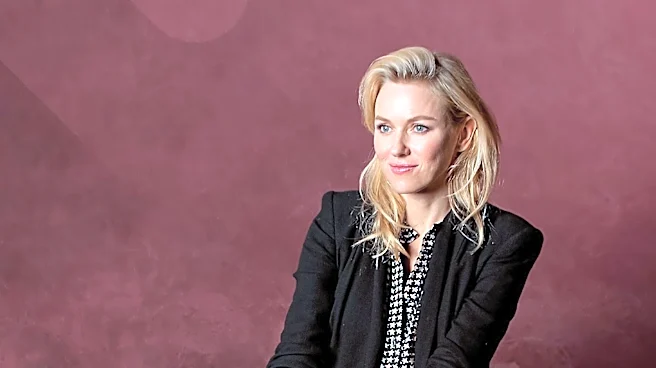
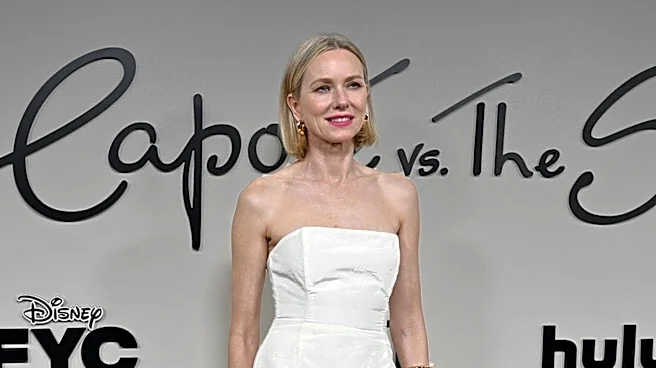
Naomi Watts, the 57-year-old actress, is taking on a challenging role in the upcoming 1960s-set thriller, 'The Housewife.' The film, based on a true story, features Watts as Hermine, a character whose secret Nazi past is uncovered by a journalist investigating
her husband. Watts described her approach to the role as entering her 'villain era,' acknowledging the fear associated with portraying such a complex and unrepentant character. She emphasized the importance of confronting such challenges to remember how hate can rise and exist close to us. Watts also shared her research process, stating her belief that 'man is the most dangerous animal' due to the sophisticated and dangerous nature of the human mind when given permission to subjugate. This role marks a significant departure for Watts, who has previously spoken about the ups and downs of her career and the rarity of consistently successful projects.
Why It's Important?
Watts' decision to tackle a role with such dark and controversial undertones highlights a growing trend in Hollywood where established actors are seeking out complex, morally ambiguous characters. This move can be seen as a way for actors to push their artistic boundaries and engage with more profound societal themes, moving beyond conventional heroic or sympathetic portrayals. For the film industry, this signals a potential shift towards more challenging narratives that explore difficult historical periods and human psychology, rather than solely focusing on escapist entertainment. The film's subject matter, dealing with a secret Nazi past, carries significant historical and ethical weight, potentially sparking important conversations about accountability, hidden histories, and the nature of evil. Watts' public statements about the 'dangerous nature of man' and the necessity of remembering such stories underscore the film's potential to serve as a cautionary tale and a reflection on human behavior, resonating with audiences interested in historical dramas and psychological thrillers.
What's Next?
The release of 'The Housewife' will likely generate considerable discussion, particularly given the sensitive nature of its subject matter and Watts' portrayal of a character with a Nazi past. Audiences and critics will be keen to see how the film handles these themes and Watts' performance. Her comments about the 'villain era' suggest a continued interest in roles that challenge her and provoke thought, indicating a potential trajectory for her future career choices. The film's success could also encourage other actors and filmmakers to explore similar complex historical narratives, potentially leading to a wave of more thought-provoking and ethically charged productions in the industry. The film's reception will also be a test of how audiences respond to narratives that delve into uncomfortable historical truths and the darker aspects of human nature.
Beyond the Headlines
Watts' engagement with a character possessing a secret Nazi past delves into the profound psychological and societal implications of hidden histories and unaddressed evils. The film's exploration of a seemingly 'upstanding citizen' harboring such a past touches upon the insidious ways in which extremist ideologies can persist and manifest within communities. This narrative can serve as a powerful commentary on the importance of confronting historical truths, even when they are uncomfortable, and the dangers of allowing such pasts to remain unexamined. The idea of an 'unrepentant' character forces audiences to grapple with the nature of forgiveness, justice, and the lasting impact of historical atrocities. Furthermore, Watts' personal reflection on 'man as the most dangerous animal' highlights a deeper philosophical inquiry into human capacity for both good and evil, suggesting that the film aims to be more than just a thriller but a profound meditation on human nature and societal responsibility.