


What's Happening?
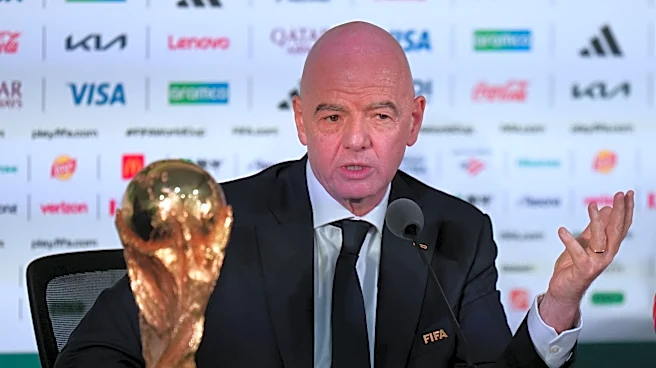
UEFA has expressed a loss of confidence in FIFA President Gianni Infantino following the fallout from a controversial investment plan. Infantino had proposed selling stakes in FIFA's competitions to private investors, a move that faced significant opposition
from UEFA and other football governing bodies. UEFA had even threatened to boycott future World Cups if the plan proceeded. On Saturday, Infantino announced that FIFA would no longer pursue the proposal, a decision welcomed by UEFA as a 'victory for the whole game.' The controversy has placed Infantino under immense pressure as he seeks re-election for a fourth term as FIFA president at the upcoming FIFA Congress in March. UEFA's statement criticized Infantino for failing to deliver on promises of transparency and accountability made during his initial campaign for the presidency in 2016.
Why It's Important?
The decision to abandon the investment plan is significant as it highlights the growing tensions between FIFA and UEFA, two of the most powerful entities in global football. UEFA's loss of confidence in Infantino's leadership could have far-reaching implications for his re-election bid and the future governance of FIFA. The controversy underscores the challenges FIFA faces in maintaining transparency and trust among its member associations. The potential boycott of World Cups by UEFA and other governing bodies could have disrupted the global football calendar and affected the sport's commercial interests. Infantino's leadership and decision-making are now under scrutiny, which could influence future policy directions and reforms within FIFA.
What's Next?
As Infantino seeks re-election, he will need to address the concerns raised by UEFA and other stakeholders to regain their trust. The upcoming FIFA Congress in March will be a critical juncture for Infantino's presidency, as member associations will decide whether to support his bid for a fourth term. The situation may prompt discussions on governance reforms within FIFA to enhance transparency and accountability. UEFA and other governing bodies may continue to push for changes in FIFA's decision-making processes to ensure that future proposals align with the interests of the global football community.