





What's Happening?
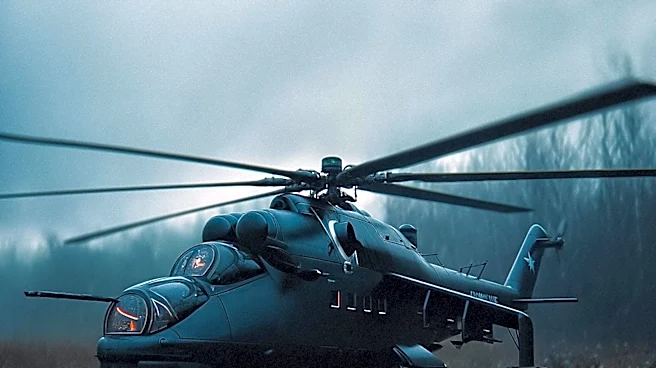
Anduril Industries, a defense technology company focused on transforming U.S. and allied military capabilities, is actively seeking a Staff Structural Engineer for its Thunder Team. This team is developing an autonomous attack rotorcraft designed to operate
alongside crewed combat aviation, delivering significant mass effects deep beyond front lines. The Staff Structural Engineer will be based at Anduril's Costa Mesa headquarters and will play a crucial role in new aircraft development within a lean, high-ownership culture. The position emphasizes rapid prototyping and deployment, aiming to fly new designs within months rather than years. The role involves working on the mission system and autonomy that powers aircraft like Thunder, specifically addressing challenges related to antenna real estate, flight in contested spectrums, and compact airframe design for weapons, sensors, and radios.
Why It's Important?
This hiring initiative by Anduril Industries signifies a critical advancement in U.S. defense technology, particularly in autonomous aerial systems. The development of the Thunder rotorcraft represents a strategic shift towards enhancing military capabilities with cutting-edge AI, computer vision, sensor fusion, and networking technology. This move is vital for maintaining a technological edge in an era of strategic competition, as it aims to deliver advanced military systems rapidly. The emphasis on autonomy and AI in defense applications has profound implications for national security, potentially reducing risks to human personnel while increasing operational effectiveness. The role of a Staff Structural Engineer in this context is pivotal, as it directly contributes to the physical integrity and performance of these advanced military assets, ensuring their reliability and effectiveness in complex operational environments.
What's Next?
The successful recruitment of a Staff Structural Engineer will directly contribute to the accelerated development and deployment of the Thunder autonomous attack rotorcraft. This will likely lead to further advancements in Anduril's family of systems, powered by Lattice OS, their AI-powered operating system. The company's commitment to bringing cutting-edge technology to the military in a compressed timeframe suggests that prototypes and operational tests of the Thunder rotorcraft could be expected in the near future. This development could also spur further innovation and competition within the defense technology sector, as other companies strive to match or exceed Anduril's rapid development cycles. The integration of such advanced autonomous systems into the U.S. military could redefine future combat strategies and operational doctrines.
Beyond the Headlines
The development of autonomous attack rotorcraft like Thunder raises significant ethical and strategic questions regarding the future of warfare. The increasing reliance on AI-powered systems in combat scenarios necessitates careful consideration of accountability, decision-making processes, and the potential for unintended consequences. From a broader perspective, this technological push highlights the ongoing arms race in advanced military hardware and software, emphasizing the importance of continuous innovation for national defense. The rapid pace of development also underscores the evolving relationship between private technology companies and the military, with firms like Anduril playing an increasingly central role in shaping defense capabilities. This trend could lead to new models of defense procurement and collaboration, impacting the entire defense industrial base.