








What's Happening?
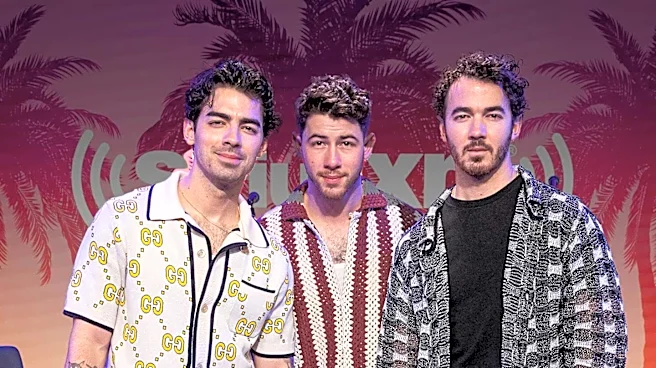
On October 29, 2013, the Jonas Brothers, a popular music trio consisting of Kevin, Joe, and Nick Jonas, announced their decision to disband. This announcement followed the cancellation of 19 tour dates earlier in October of the same year, which the group
attributed to creative differences and a significant rift among the members. Prior to their split, the Jonas Brothers had achieved considerable success, selling over 17 million albums globally. Their career also included starring roles in a Disney Channel television show and a movie, alongside the release of four studio albums. The group had experienced a rapid ascent to fame since their formation. Despite the 2013 breakup, the Jonas Brothers later reunited in 2019, much to the anticipation of their fanbase.
Why It's Important?
The disbandment of a highly successful group like the Jonas Brothers in 2013 highlights the common challenges faced by musical acts, particularly those composed of family members, regarding creative control and personal dynamics. Their initial success, bolstered by Disney Channel exposure, demonstrated a powerful model for artist development in the early 21st century, blending music with multimedia entertainment. The subsequent reunion in 2019 also underscores a growing trend in the music industry where established acts, after a hiatus, return to capitalize on nostalgia and evolving fan bases. This cycle of breakup and reunion can significantly impact the music market, influencing touring revenues, album sales, and the broader entertainment landscape as artists navigate personal growth and professional aspirations.
What's Next?
Following their 2019 reunion, the Jonas Brothers have continued to release new music and embark on tours, indicating a sustained presence in the music industry. Their future endeavors will likely involve balancing individual projects with group commitments, a common strategy for reunited bands. The success of their reunion could influence other artists considering similar comebacks, potentially leading to more established groups exploring returns to the spotlight. For fans, the continued activity of the Jonas Brothers means more opportunities for new music and live performances, while for the industry, it represents a valuable asset in terms of established brand recognition and a dedicated audience.
Beyond the Headlines
The Jonas Brothers' journey, from Disney-backed pop stars to a disbanded group and then a successful reunion, reflects broader shifts in celebrity culture and the music industry. Their initial rise showcased the power of synergistic media platforms in creating global sensations. The challenges leading to their 2013 split underscore the intense pressures of fame and the complexities of maintaining creative harmony within a group, especially when personal relationships are involved. Their eventual reunion speaks to the enduring appeal of nostalgia and the potential for artists to evolve both individually and collectively, demonstrating that creative differences can sometimes be overcome or managed with time and maturity. This narrative offers insights into the long-term sustainability of musical careers in an ever-changing entertainment landscape.