



What's Happening?
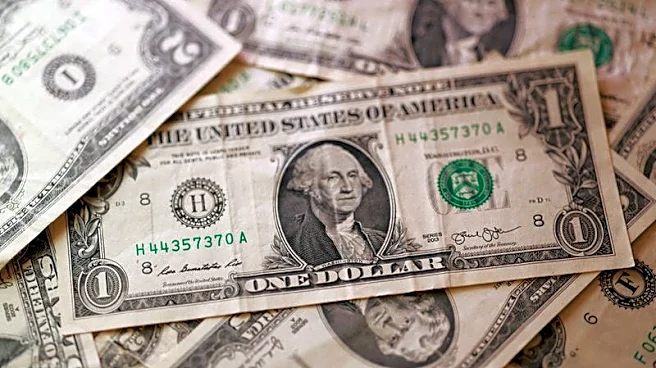
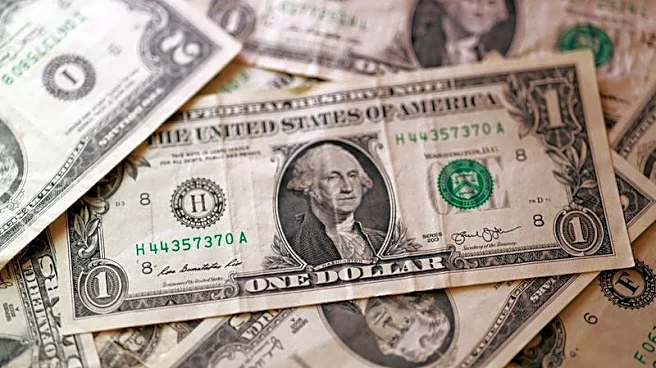
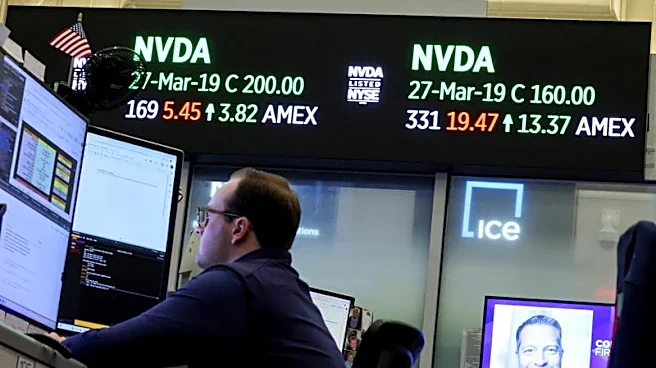
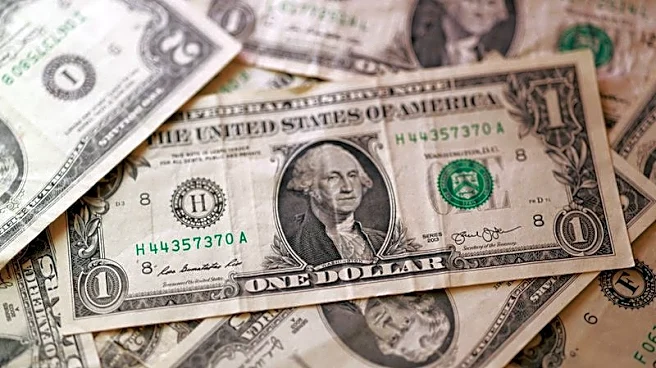
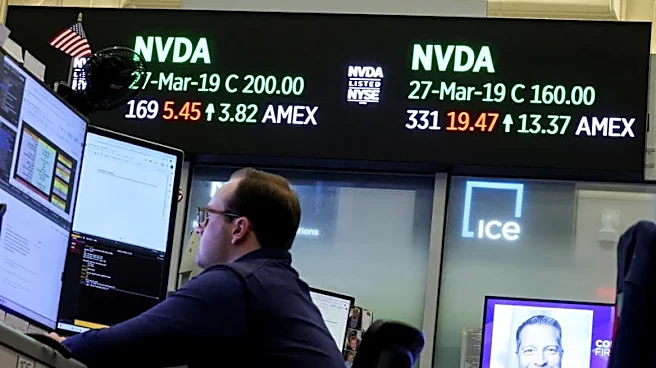
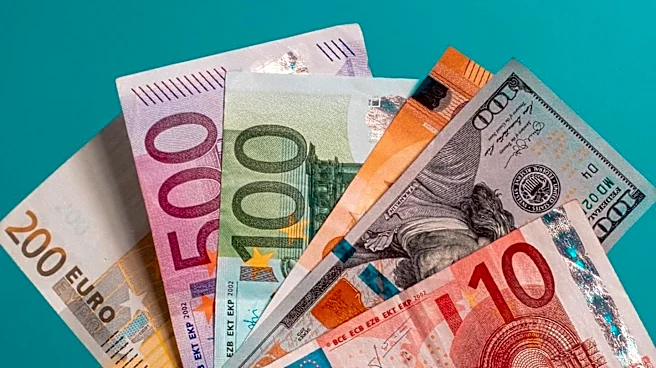
The US dollar strengthened on Monday, reaching a 19-month high against the Euro, with the dollar index (DXY) rising by 0.41% to 104.27. This surge is attributed to renewed optimism in the artificial intelligence (AI) sector, following Jensen Huang's return
as Nvidia chief executive, which saw Nvidia shares increase by 33%. Additionally, traders are anticipating a more hawkish stance from the Federal Reserve. Fed funds futures now fully price in a quarter-point interest rate hike in December and indicate a 67% probability of another hike in January. Despite these gains, Scotiabank currency strategist Eric Theoret noted that the dollar is trading above levels expected based purely on fundamentals. The upcoming October personal consumption expenditures (PCE) price index, the Fed's preferred inflation gauge, is expected to provide further direction.
Why It's Important?
The dollar's appreciation has significant implications for the U.S. economy and global trade. A stronger dollar makes U.S. exports more expensive, potentially impacting American companies that rely on international sales. Conversely, it makes imports cheaper, which could help temper inflation but might also hurt domestic industries competing with foreign goods. The expectation of further Federal Reserve rate hikes signals a commitment to controlling inflation, which could lead to higher borrowing costs for businesses and consumers. Capital inflows into the U.S. tech sector, particularly driven by AI optimism, highlight the continued attractiveness of American innovation and investment opportunities, drawing global capital and further bolstering the dollar. This dynamic also affects the competitiveness of U.S. assets and investments on the global stage.
What's Next?
The market's focus will shift to the release of the October personal consumption expenditures (PCE) price index on Wednesday, which is the Federal Reserve's preferred inflation gauge. This data will be crucial in shaping expectations for future monetary policy decisions. If the PCE index shows persistent inflation, it could reinforce the likelihood of further rate hikes by the Federal Reserve, potentially leading to continued dollar strength. Conversely, a weaker-than-expected inflation report might temper hawkish expectations. The Federal Reserve's December meeting will be closely watched for confirmation of the anticipated quarter-point rate hike and any forward guidance on future policy. The performance of the AI sector and broader tech market will also continue to influence capital flows and, consequently, the dollar's trajectory.
Beyond the Headlines
The dollar's current strength, while partly driven by economic fundamentals and monetary policy expectations, also reflects a broader global sentiment towards U.S. technological leadership, particularly in AI. The significant boost from Nvidia's performance underscores how innovation in key sectors can attract substantial capital, creating a feedback loop that strengthens the national currency. This trend could exacerbate economic divergences between the U.S. and other major economies, such as the Eurozone, where economic resilience is uneven. The sustained strength of the dollar could also influence global financial stability, as many international transactions and debts are denominated in USD. This situation highlights the complex interplay between technological advancements, monetary policy, and global currency valuations, with potential long-term implications for international trade balances and investment patterns.