






What's Happening?
Social media accounts have falsely claimed that extreme heat in Italy is threatening Parmigiano Reggiano cheese production and the 'cheese banks' that store the wheels as collateral for loans. The Associated Press reports that these claims, suggesting
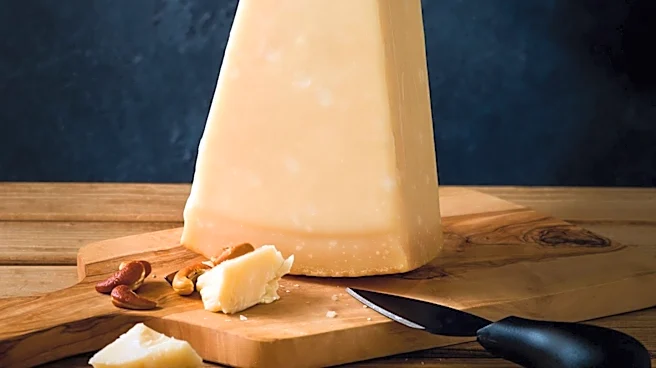
a 'Great Parmesan Crisis,' are inaccurate. Parmigiano Reggiano cheese is produced under strict specifications within defined geographic areas in Italy's Emilia Romagna region, requiring a minimum aging period of 12 months. Banks, such as Credito Emiliano S.p.A’s Magazini Generali delle Tagliate (MGT), accept these cheese wheels as collateral. MGT, which stores 500,000 cheese wheels valued at 300 million euros, confirmed that its operations and the cheese are not at risk. While the extreme heat has increased energy consumption by 30% to keep facilities cool, the warehouses continue to operate normally, maintaining optimal storage conditions for the cheese. The Parmigiano Reggiano consortium also stated that production is not currently at risk, noting that farms supplying milk are equipped with cooling systems for cows and rely on preserved forage.
Why It's Important?
This incident highlights the rapid spread of misinformation on social media, particularly concerning economic and agricultural sectors. False claims about a 'Great Parmesan Crisis' could potentially impact consumer confidence, market stability for Parmigiano Reggiano, and the financial institutions that rely on it as collateral. The fact that a major bank uses cheese wheels as loan collateral underscores the significant economic value and cultural importance of this product to the region. The increased energy consumption due to extreme heat, even without direct damage to the product, points to the broader challenges faced by industries in adapting to climate change. This situation also emphasizes the need for reliable fact-checking and responsible dissemination of information to prevent undue panic and economic disruption.
What's Next?
The Parmigiano Reggiano consortium and MGT will likely continue to monitor the impact of extreme weather conditions on production and storage, potentially investing further in energy-efficient technologies and climate adaptation strategies. The incident serves as a reminder for consumers and financial markets to verify information from credible sources before reacting to social media claims. Efforts to combat misinformation will remain crucial, especially as climate change continues to present new challenges to various industries. The long-term consequences of persistent extreme heat on agricultural practices, such as milk production, will require ongoing attention and adaptation from producers to ensure the continued quality and availability of products like Parmigiano Reggiano.
Beyond the Headlines
This story delves into the unique intersection of traditional agricultural practices, modern finance, and the pervasive influence of social media. The concept of 'cheese banks' as collateral for loans is a testament to the enduring value and stability of certain artisanal products, reflecting a deep cultural and economic heritage. The rapid spread of false information, even about a niche product like Parmigiano Reggiano, underscores the fragility of public perception in the digital age and the potential for misinformation to create real-world anxieties. It also subtly highlights the broader narrative of climate change impacting even seemingly resilient industries, forcing them to adapt and innovate. The incident serves as a micro-example of how global challenges, like extreme weather, can intersect with local economies and the digital information landscape, creating complex scenarios that require careful management and communication.