





What's Happening?
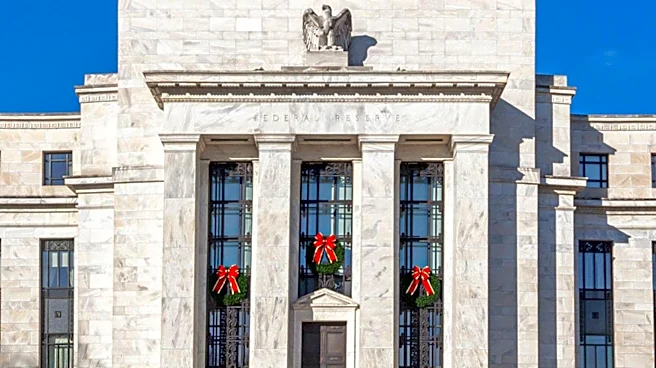
The Federal Reserve Board has announced an enforcement action against American Express Company. This action addresses the firm's failure to adequately detect and report suspicious activities related to money laundering. The Board identified significant
deficiencies in the implementation of American Express Company's enterprise-wide anti-money laundering program, particularly within its subsidiary national bank. The Office of the Comptroller of the Currency (OCC), which is the primary federal regulator for the firm's national bank, has issued a separate enforcement action against the bank. This move by the Federal Reserve aims to ensure that American Express operates in full compliance with all U.S. laws and regulations concerning financial crime prevention.
Why It's Important?
This enforcement action underscores the critical importance of robust anti-money laundering (AML) programs for financial institutions operating in the U.S. The failure of a major company like American Express to detect and report suspicious activity can have far-reaching consequences, potentially facilitating illicit financial flows that support criminal enterprises, terrorism, and other illegal activities. For the financial industry, this serves as a strong reminder of the regulatory scrutiny on AML compliance and the potential for significant penalties and reputational damage for non-compliance. It also highlights the coordinated efforts between different federal regulators, such as the Federal Reserve and the OCC, to maintain the integrity of the U.S. financial system. This action reinforces the expectation that all financial entities must invest adequately in their compliance infrastructure to prevent their services from being exploited for illegal purposes.
What's Next?
American Express Company will be required to address the identified deficiencies in its anti-money laundering program. This will likely involve a comprehensive review and overhaul of its internal controls, systems, and training protocols to enhance its ability to detect and report suspicious activities. The firm will also need to work closely with both the Federal Reserve and the Office of the Comptroller of the Currency to demonstrate sustained compliance with U.S. laws and regulations. Future actions could include ongoing monitoring by regulators, potential fines, and further directives to ensure the effectiveness of its AML framework. The outcome of this enforcement action will likely influence how other financial institutions review and strengthen their own compliance measures to avoid similar regulatory scrutiny.
Beyond the Headlines
The enforcement action against American Express highlights a broader challenge within the financial sector: the increasing sophistication of money laundering schemes and the continuous need for financial institutions to adapt and upgrade their detection capabilities. Beyond the immediate compliance requirements, this event could prompt a re-evaluation of the technological and human resources dedicated to AML efforts across the industry. It also brings to light the ethical responsibility of financial institutions to act as gatekeepers against financial crime, protecting not only their own integrity but also the broader economic system from abuse. The incident may also spur discussions on potential legislative or regulatory enhancements to AML frameworks, particularly as financial transactions become more complex and globalized, demanding more stringent and effective oversight.