





What's Happening?
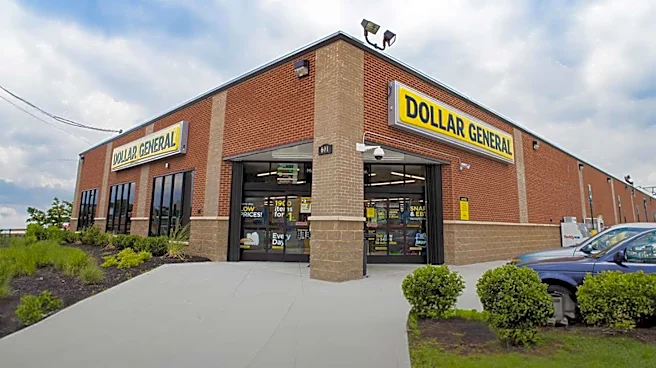
The Federal Trade Commission (FTC) announced on Friday, November 20, 2026, that ten additional states have joined its lawsuit against Dollar General, bringing the total number of co-plaintiff states to 30. The lawsuit accuses Dollar General of consistently
charging customers more at checkout than the prices displayed on shelves, tags, and advertisements. The new states joining the complaint are Delaware, Georgia, Kentucky, Maine, Minnesota, New Mexico, Oregon, Rhode Island, South Carolina, and South Dakota. The FTC's amended complaint, filed in the U.S. District Court for the Middle District of Tennessee, alleges that Dollar General has a long-standing issue with mislabeled prices, was aware of the problem, and failed to implement adequate safeguards. This alleged practice has reportedly cost shoppers millions of dollars, violating the FTC Act, the Gramm-Leach-Bliley Act, and various state laws. The FTC is seeking a permanent injunction, a monetary judgment, and civil penalties, though the exact amount of overcharges remains unquantified in the complaint. Dollar General's CEO, Todd Vasos, previously stated on an August 27, 2026 earnings call that 'Price is paramount for our customer,' highlighting the company's reliance on price accuracy for its business model.
Why It's Important?
This expanding multi-state lawsuit against Dollar General carries significant implications for consumer protection and the retail industry. The core issue of price accuracy is fundamental to consumer trust, especially for a discount retailer like Dollar General, whose business model heavily relies on the promise of low and transparent pricing. The involvement of 30 states, alongside the FTC, amplifies the legal and financial risks for the company, as each state can pursue its own consumer-protection claims and potential penalties. For consumers, the lawsuit addresses concerns about being overcharged, which can disproportionately affect lower-income individuals who frequently shop at dollar stores. The outcome could lead to stricter regulations on pricing practices across the retail sector, potentially forcing companies to invest more in technology and staff training to ensure price integrity. For Dollar General, a court-ordered injunction dictating pricing routines across its more than 21,000 stores could be more costly and disruptive than a monetary penalty, impacting operational efficiency and profitability. The company's stock performance, while not directly linked to Friday's market-wide decline, remains under scrutiny as the legal proceedings unfold.
What's Next?
Dollar General's next quarterly report, expected before market open on Thursday, December 3, will be a key indicator of the company's financial outlook and its strategy regarding the lawsuit. Investors will be looking for any disclosure of a legal reserve or a settlement, which could signal the company's readiness to address the claims. The company previously stated in October that it would fight the case, asserting that pricing errors are occasional and that it had upgraded its price-accuracy processes. However, the FTC's amended complaint and the growing coalition of states suggest a more challenging legal battle. The most probable outcome, according to analysts, is a combination of a payment and court-supervised pricing rules. This would likely involve a significant financial settlement and mandated changes to Dollar General's operational procedures to ensure price accuracy. The continued addition of states to the lawsuit without a corresponding legal reserve set aside by Dollar General could further escalate the situation and potentially impact investor confidence. The legal proceedings will determine the extent of the penalties and the long-term operational adjustments required from the retailer.
Beyond the Headlines
The lawsuit against Dollar General highlights a broader ethical and systemic challenge within the retail industry concerning pricing integrity. Beyond the immediate financial and legal ramifications, this case underscores the vulnerability of consumers, particularly those in lower-income brackets, to deceptive pricing practices. The reliance on shelf tags and advertised prices as a 'promise' to customers is a cornerstone of trust in retail. When this trust is eroded, it can lead to widespread consumer distrust in the marketplace. The FTC's involvement, alongside numerous state attorneys general, signals a growing regulatory focus on protecting consumers from such discrepancies. This case could set a precedent for how retailers are held accountable for pricing accuracy, potentially leading to more stringent oversight and enforcement mechanisms. It also raises questions about corporate responsibility and the internal controls companies have in place to prevent and rectify systemic issues that impact their customer base. The long-term implications could include a shift towards more transparent pricing technologies and increased investment in compliance to avoid similar legal challenges, ultimately benefiting consumers by ensuring they pay the advertised price.