






What's Happening?
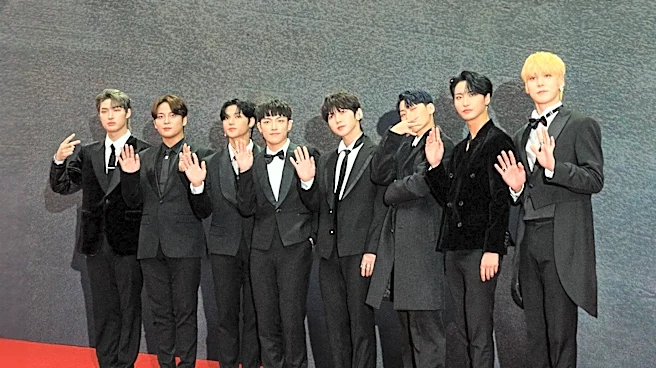
K-pop idol San of the group ATEEZ has publicly denied dating rumors that arose after unauthorized photos of him with a woman in Milan circulated online. His agency clarified that the woman was affiliated with a brand and that security personnel and managers
were also present during what was a work-related outing. San expressed frustration over being followed and secretly photographed during his overseas schedule, emphasizing that such actions are inappropriate. This incident follows a similar situation involving the coed K-pop group ALLDAY PROJECT, whose members were photographed without consent while sleeping on a high-speed train. These events have sparked a broader discussion within the K-pop community regarding celebrity privacy and the ethical boundaries of fan interactions and content sharing.
Why It's Important?
The incidents involving ATEEZ's San and ALLDAY PROJECT highlight a growing concern within the entertainment industry, particularly for K-pop stars, regarding personal privacy and the impact of social media. Unauthorized photography and the rapid spread of such images can lead to misinterpretations, false rumors, and unwanted scrutiny, significantly affecting a celebrity's personal and professional life. This situation underscores the challenges faced by public figures in maintaining a degree of privacy in an age where every moment can be captured and shared instantly. For K-pop agencies, it necessitates a reevaluation of security measures and public relations strategies to protect their artists from invasive fan behavior and the potential damage caused by online speculation. The discussion also extends to the responsibility of fans and the public in respecting celebrity boundaries, questioning the ethics of turning candid moments into viral content.
What's Next?
Following these incidents, K-pop agencies may increase their efforts to educate fans about privacy boundaries and the legal implications of unauthorized photography. There could be a push for stricter guidelines or policies from entertainment companies regarding fan conduct, especially during public appearances and international schedules. Social media platforms might also face increased pressure to address the rapid dissemination of unverified information and unauthorized content related to celebrities. For the artists themselves, these events could lead to more cautious public interactions and potentially a more guarded approach to their personal lives. The ongoing dialogue among fans and industry stakeholders is expected to continue, aiming to establish a healthier and more respectful environment for K-pop stars.
Beyond the Headlines
The unauthorized photography and subsequent dating rumors surrounding K-pop stars like San delve into deeper societal implications concerning celebrity culture, digital ethics, and the right to privacy. The phenomenon of 'sasaengs' (obsessive fans) who engage in invasive behaviors raises questions about the psychological impact on celebrities and the blurred lines between admiration and harassment. This issue also reflects broader trends in the digital age where personal boundaries are increasingly challenged by the ease of content creation and sharing. Ethically, it prompts a re-examination of what constitutes public versus private space for public figures and the moral responsibility of individuals who capture and disseminate such images. Culturally, it highlights the intense scrutiny and expectations placed upon K-pop idols, where even innocent interactions can be misconstrued and lead to significant personal and professional repercussions.