






What's Happening?
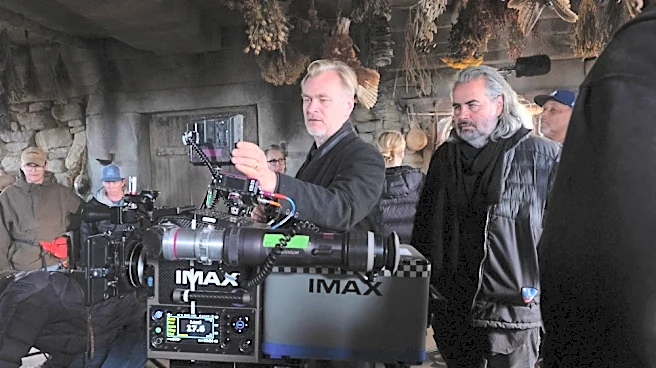
Christopher Nolan's film adaptation of 'The Odyssey' has become a major cinematic event, drawing attention for its ambitious scale and thematic depth. The film, which reimagines the ancient Greek epic, explores the moral and philosophical implications
of divine law and human agency. A conversation among film critics and scholars, including Dr. Jonathan Olson, highlights the film's treatment of the gods as ambiguous forces, reflecting on the moral weight of Odysseus's actions. The film's portrayal of Odysseus's journey emphasizes themes of atonement and societal collapse, resonating with contemporary issues of moral responsibility and the consequences of human actions.
Why It's Important?
Nolan's 'The Odyssey' is significant for its exploration of timeless themes such as the interplay between divine law and human agency, which are particularly relevant in today's context of moral and ethical dilemmas. The film challenges viewers to consider the impact of their actions within a broader societal framework, echoing the ancient epic's exploration of justice and retribution. By reinterpreting these themes through a modern lens, Nolan's film invites audiences to reflect on the enduring relevance of classical narratives and their implications for contemporary society.
Beyond the Headlines
The film's reinterpretation of 'The Odyssey' also raises questions about the nature of storytelling and the role of myth in shaping cultural and moral values. Nolan's approach, which blends traditional epic elements with modern cinematic techniques, highlights the potential for classical stories to offer insights into current social and ethical issues. The film's emphasis on atonement and the consequences of deception aligns with broader themes in Nolan's body of work, suggesting a continued exploration of the human condition and the search for meaning in a complex world.