




What's Happening?
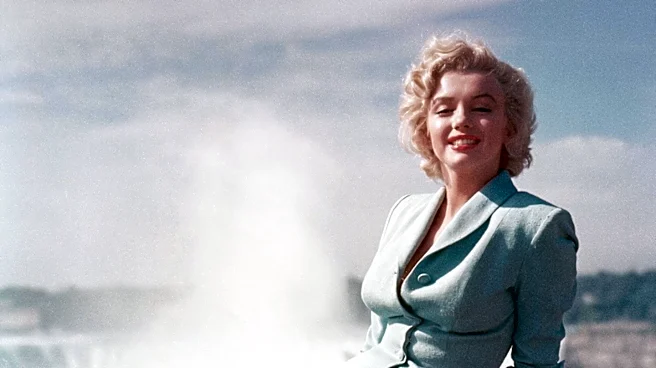
The life of Marilyn Monroe, born Norma Jeane Mortenson, is being re-examined, focusing on her challenging childhood and lifelong search for security. Born in 1926 in Los Angeles, Norma Jeane experienced a tumultuous upbringing marked by her mother Gladys
Pearl Baker's severe psychiatric illness, leading to institutionalization and Norma Jeane's placement in foster homes and an orphanage. This instability fostered a deep-seated need for belonging and safety. Her early life also included accounts of sexual abuse, which were often dismissed but are now taken more seriously by biographers. At 16, she married James 'Jim' Dougherty to escape institutional care. Her discovery by a photographer during World War II led to a modeling career and her transformation into Marilyn Monroe. Despite achieving global fame, wealth, and desire, Monroe continued to struggle with emotional pain, prescription drug dependence, and a longing for the stable family life she never had.
Why It's Important?
Marilyn Monroe's enduring legacy and the continuous re-evaluation of her life story are important for understanding the complexities of celebrity, mental health, and societal pressures in the U.S. The narrative highlights how early childhood trauma can profoundly impact an individual's adult life, even amidst immense success. Her struggles with identity, the objectification of her image, and her battle for artistic respect shed light on the challenges faced by women in Hollywood and the entertainment industry. The story also serves as a cautionary tale about the illusion of external achievements bringing internal peace, emphasizing that fame and wealth do not necessarily heal deep-seated emotional wounds. Her life prompts reflection on how society consumes and often misunderstands public figures, reducing complex individuals to simplified images or scandals.
What's Next?
The ongoing interest in Marilyn Monroe's life ensures that her story will continue to be explored through various media, including documentaries, biographies, and films. Future interpretations will likely delve deeper into the psychological impacts of her childhood, her relationships, and her struggles with mental health, moving beyond sensationalized accounts. The discussion around her life will continue to contribute to broader conversations about mental health awareness, the ethics of celebrity culture, and the historical treatment of women in the public eye. Her story remains a powerful reminder of the human cost of fame and the importance of addressing internal well-being regardless of external success.
Beyond the Headlines
Marilyn Monroe's life offers a profound 'Beyond the Headlines' perspective on the human condition, particularly the disconnect between public image and private suffering. Her story illustrates how societal desires and projections can create an iconic persona that overshadows the real person. The contrast between the glamorous Marilyn Monroe and the vulnerable Norma Jeane Mortenson speaks to the universal human struggle for authenticity and acceptance. Her reliance on prescription medication and alcohol, common in Hollywood during her era, highlights the systemic issues within the entertainment industry that often failed to support the mental health of its stars. The enduring conspiracy theories surrounding her death, despite official rulings, reflect a societal tendency to seek dramatic explanations for complex tragedies, often at the expense of acknowledging the profound personal pain that can lead to such outcomes. Ultimately, Monroe's life serves as a poignant commentary on the pursuit of happiness, the nature of love, and the elusive quest for security in a world that often values performance over genuine connection.