

What's Happening?
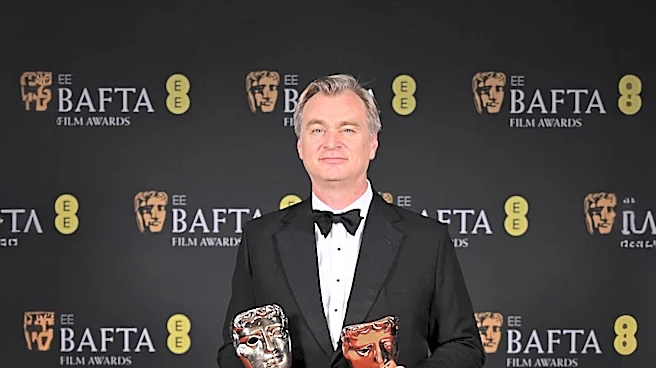
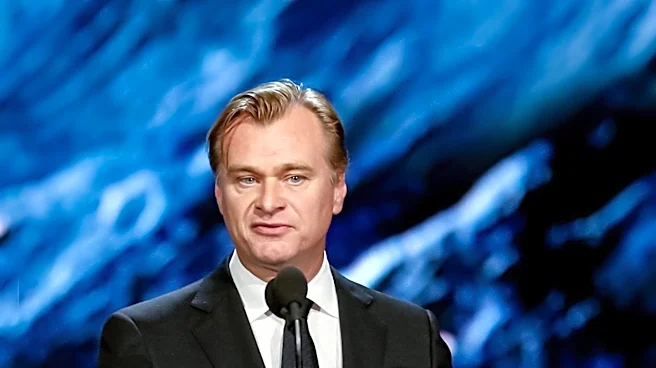
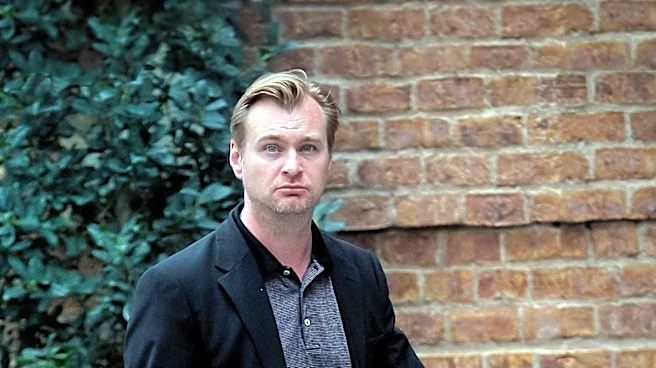
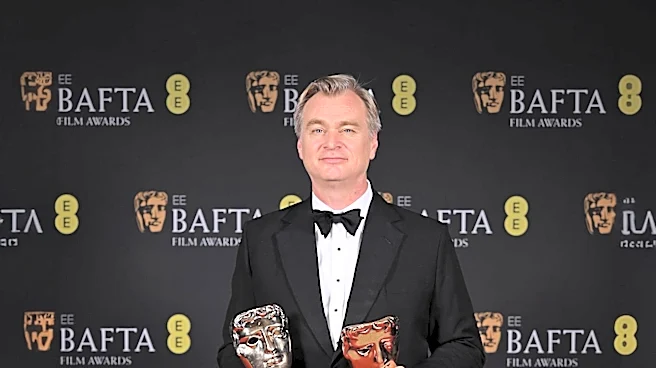
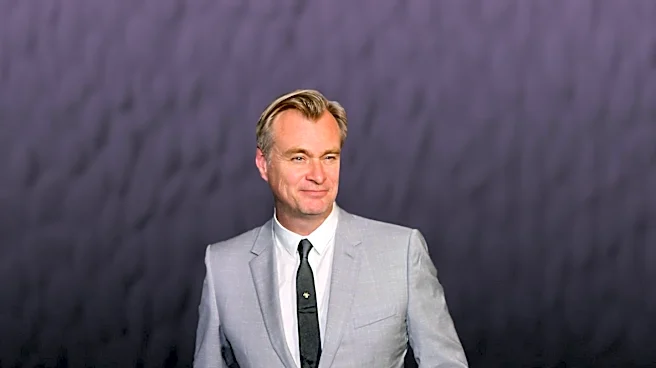
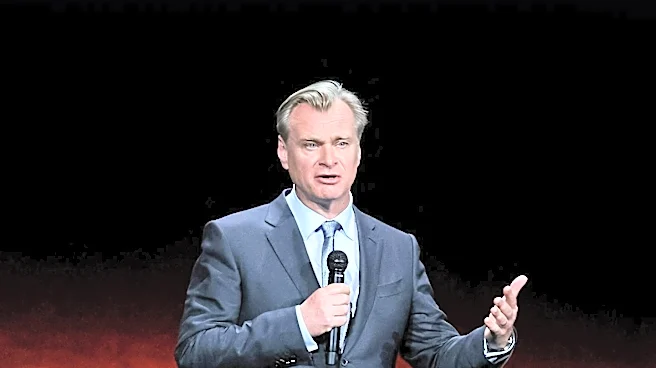
Christopher Nolan, during a promotional interview for his film 'The Odyssey,' expressed concerns about what he perceives as a fundamental flaw in modern film criticism. Nolan argues that critics often invalidate storytelling mechanisms simply because
they are identifiable. He elaborates that this approach undermines the effectiveness of storytelling, as the ability to recognize a mechanism does not diminish its value. Nolan's adaptation of Homer's 'The Odyssey' portrays Odysseus, played by Matt Damon, in a contemporary light, emphasizing reflection and repentance. This interpretation has sparked debate among classicists and audiences, with some critics suggesting that the film's themes are overly influenced by modern American values. Nolan defends his approach, stating that storytelling must engage with audience expectations and that the mechanisms used are part of a universal storytelling language developed by Hollywood over the past century.
Why It's Important?
Nolan's critique highlights a broader conversation about the role of film criticism and its impact on the film industry. By challenging the notion that identifiable storytelling mechanisms are inherently flawed, Nolan advocates for a more nuanced understanding of narrative techniques. This perspective could influence how films are critiqued and appreciated, potentially encouraging critics to focus on the effectiveness of storytelling rather than its predictability. For filmmakers, this could mean greater creative freedom to explore traditional narrative structures without fear of critical dismissal. The debate also underscores the tension between artistic intent and audience reception, a dynamic that shapes the evolution of film as an art form.
What's Next?
As Nolan's 'The Odyssey' continues its global rollout, including its upcoming release in China, the film's reception will likely fuel further discussions about the intersection of classic literature and modern filmmaking. The response from audiences and critics may influence future adaptations of classic works, as filmmakers navigate the balance between staying true to original texts and appealing to contemporary sensibilities. Additionally, Nolan's comments may prompt a reevaluation of film criticism practices, potentially leading to a shift in how films are analyzed and discussed in both professional and amateur circles.