




What's Happening?
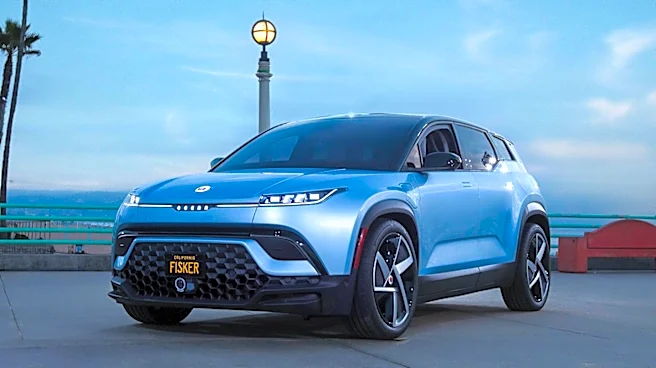
Fisker Inc., an American electric vehicle (EV) company, filed for Chapter 11 bankruptcy protection in June 2024. This move followed significant financial and operational challenges, including cash shortages, production and delivery issues, software concerns,
and weaker-than-expected commercial performance for its flagship product, the Fisker Ocean, an all-electric SUV. The company's liquidation plan became effective on October 17, 2024, with the bankruptcy process expected to continue through 2026. Fisker Inc. was founded in 2016 by Henrik Fisker, who had previously co-founded Fisker Automotive, which also filed for Chapter 11 bankruptcy in 2013. The Fisker Ocean, known for its exterior styling, technology-focused interior, and sustainability features, was manufactured under a contract model with Magna Steyr in Austria. Despite initial investor enthusiasm, which saw the company's market value reach up to $8 billion after going public in 2020, Fisker Inc. ultimately struggled to translate design vision into sustainable business success.
Why It's Important?
The bankruptcy of Fisker Inc. underscores the inherent difficulties and high risks associated with launching and scaling new ventures in the highly competitive electric vehicle market. This event highlights that innovative product design and a focus on sustainable transportation are not sufficient for success without robust manufacturing capabilities, effective financial management, and efficient operational execution. For the U.S. EV industry, Fisker's failure serves as a cautionary tale, emphasizing the immense capital requirements, supply chain complexities, and quality control challenges that new entrants face when competing with established automakers. Investors in the EV sector may become more scrutinizing, demanding clearer paths to profitability and proven operational stability from startups. Consumers who purchased Fisker Ocean vehicles may face uncertainties regarding warranty support, servicing, and resale value, potentially eroding trust in emerging EV brands.
What's Next?
The liquidation process for Fisker Inc. will continue through 2026, involving the sale of its remaining assets to satisfy creditors. This will likely impact suppliers, employees, and customers who are still awaiting deliveries or require vehicle servicing. The broader EV market may see increased consolidation as smaller, less financially stable companies struggle to compete. Established automakers and more robust EV players might benefit from reduced competition, but the overall investor sentiment towards high-risk EV startups could remain cautious. Future EV startups will likely need to demonstrate stronger business models, secure more substantial funding, and establish reliable production and delivery systems from the outset to gain investor confidence and market traction.
Beyond the Headlines
Fisker Inc.'s repeated bankruptcy, following that of Fisker Automotive, raises deeper questions about the balance between design innovation and business acumen in the automotive industry. It highlights the 'designer-founder' dilemma, where a strong creative vision, while crucial for product appeal, may not be enough to navigate the complexities of manufacturing, logistics, and financial management on a large scale. The case also reflects the broader challenges faced by startups in capital-intensive industries, where the allure of disruptive technology often overshadows the practicalities of execution. This outcome could lead to a re-evaluation of investment strategies in the EV sector, favoring companies with proven operational leadership and a more conservative approach to growth over those primarily driven by charismatic founders and ambitious product concepts.