








What's Happening?
GE Vernova's stock experienced a 6% drop despite a surge in AI-driven orders, as the company's wind segment underperformed. The gas turbine maker reported quarterly earnings that missed expectations, although revenue exceeded estimates. The company saw
an 88% increase in total orders, driven by demand in its Power and Electrification segment. However, the wind unit faced a 40% decline in new orders and increased costs for offshore projects. CEO Scott Strazik announced an updated revenue forecast for 2026, projecting $45.5 billion to $46.5 billion, up from the previous $44.5 billion to $45.5 billion. GE Vernova's HA gas turbine fleet has achieved significant milestones, with over four million commercial operating hours and 130 units commissioned globally.
Why It's Important?
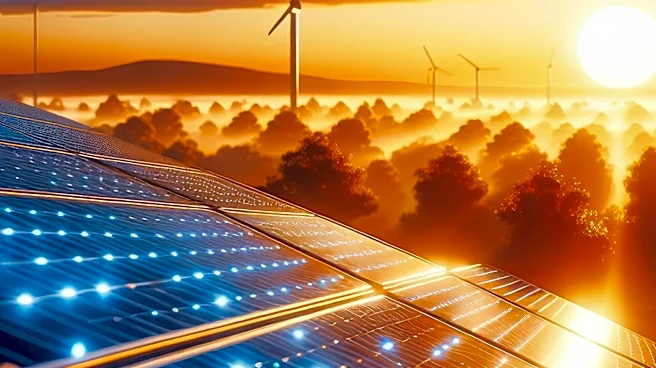
The decline in GE Vernova's stock highlights the challenges faced by companies in balancing growth across different segments. While the surge in AI-driven orders reflects the growing demand for advanced power solutions, the underperformance of the wind segment underscores the difficulties in managing diverse energy portfolios. This situation is indicative of broader industry trends, where companies must navigate the complexities of transitioning to renewable energy while maintaining profitability. The company's ability to adapt and address these challenges will be crucial for its long-term success and could influence investor confidence and market dynamics in the energy sector.
What's Next?
GE Vernova may need to reassess its strategy for the wind segment to address the decline in orders and rising project costs. This could involve optimizing operations, exploring new markets, or investing in technological innovations to enhance competitiveness. The company's performance in the coming quarters will be closely watched by investors and industry analysts, as it seeks to capitalize on the growing demand for electrification and power solutions. Additionally, the broader implications for the energy sector, particularly in the context of AI and renewable energy integration, will be significant as companies strive to meet evolving market demands.