








What's Happening?
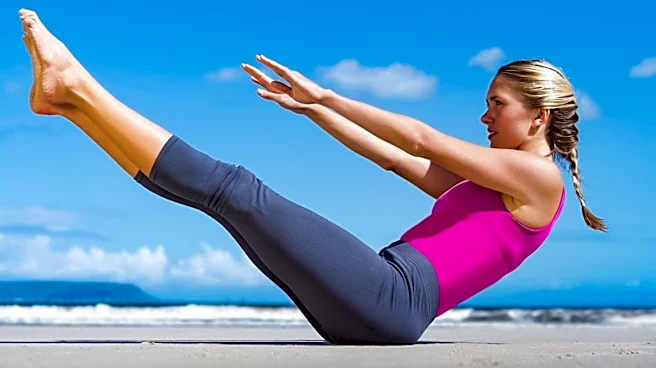
Liz Earle, a wellness guru, has revealed her weekly workout routine aimed at maintaining health and fitness as she ages. Her regimen includes a mix of strength training, cardio, yoga, and Pilates, emphasizing consistency and variety. Earle's approach
involves home-based strength workouts using bodyweight or household items, cardio through walking or running, and flexibility exercises like yoga and Pilates. She highlights the importance of exercise diversity, supported by studies showing reduced mortality risks with varied physical activity. Earle's routine is designed to be simple yet effective, focusing on regular movement and adaptability.
Why It's Important?
Earle's workout routine underscores the growing emphasis on maintaining health and fitness in later life. Her approach aligns with research advocating for diverse physical activities to enhance longevity and reduce disease risk. This routine offers a practical model for individuals seeking to improve their health without extensive gym time, promoting a balanced lifestyle. The focus on variety and consistency can inspire others to adopt similar practices, potentially leading to broader public health benefits by encouraging active aging and reducing healthcare burdens associated with sedentary lifestyles.
What's Next?
As Earle continues to share her fitness journey, her influence may encourage more people to adopt similar routines. The fitness industry could see increased demand for accessible, home-based workout programs catering to older adults. Additionally, public health initiatives might incorporate Earle's principles, promoting exercise diversity and consistency as key components of healthy aging strategies. This could lead to collaborations with fitness experts to develop tailored programs for different age groups, further integrating these practices into mainstream health and wellness advice.
Beyond the Headlines
Earle's routine highlights the cultural shift towards valuing health and fitness at all ages. It challenges traditional notions of aging, promoting an active lifestyle as a means to enhance quality of life. This perspective may influence societal attitudes towards aging, encouraging more inclusive and supportive environments for older adults to engage in physical activities. Furthermore, it raises awareness about the importance of mental well-being, as regular exercise is linked to improved mood and cognitive function, contributing to a holistic approach to aging.