


What's Happening?
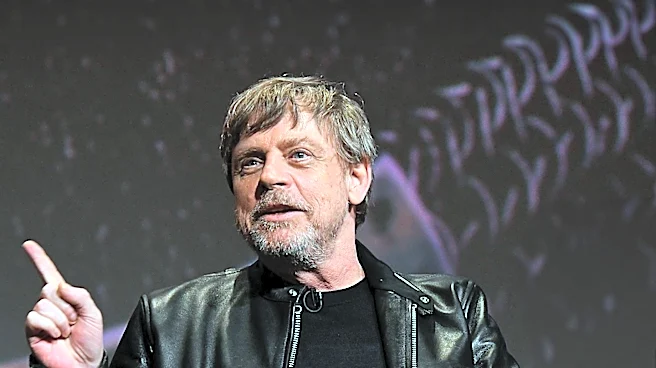
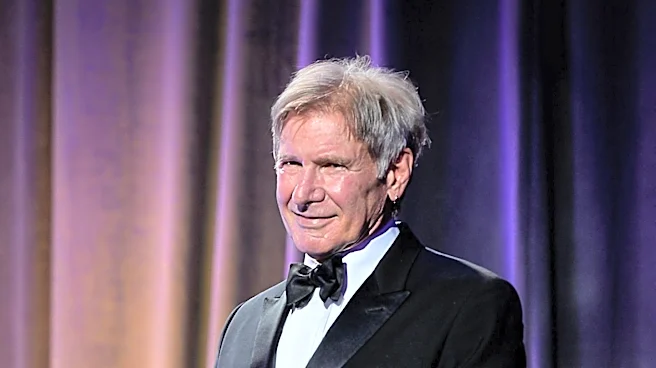
Mark Hamill, known for his role as Luke Skywalker in the Star Wars franchise, has publicly expressed his admiration for his former co-star, Harrison Ford. Hamill, 75, described Ford, 84, as 'wonderful' and highlighted his lack of pretension despite his significant
fame. Hamill recalled being particularly impressed by Ford's comprehensive understanding of the Star Wars screenplay, noting that Ford possessed knowledge not just of his own part but of the entire script. This deep engagement with the material was especially valuable given that director George Lucas was not typically an 'actor's director,' often leaving actors to discuss motivations and backstories among themselves. Hamill frequently consulted with Ford on such matters to avoid bothering Lucas. Their decades-long friendship is characterized by a low-maintenance dynamic, where they pick up exactly where they left off, regardless of how much time has passed between meetings. This sentiment was echoed by Anthony Mackie, who recently worked with Ford on 'Captain America: Brave New World,' expressing surprise at Ford's 'normal' and approachable demeanor.
Why It's Important?
This story highlights the enduring professional respect and personal camaraderie within Hollywood's veteran acting community, particularly among icons of the Star Wars saga. For fans, it offers a rare glimpse into the working relationships and personal dynamics behind the scenes of one of the most influential film franchises in history. Hamill's comments underscore Ford's reputation not just as a talented actor but also as a dedicated professional who deeply understands his craft and the broader narrative. This insight can influence public perception of these actors, reinforcing their status as respected figures in the entertainment industry. Furthermore, the anecdote about Ford's willingness to engage with the entire screenplay, rather than just his own lines, speaks to a level of commitment that can inspire younger actors and filmmakers. It also subtly critiques directorial styles, suggesting the value of collaborative input from actors, especially when a director might be less focused on character motivation.
What's Next?
While this particular story focuses on past and present reflections, the continued public praise from esteemed colleagues like Mark Hamill and Anthony Mackie could further solidify Harrison Ford's legacy as a respected figure in Hollywood. Such testimonials often contribute to an actor's enduring appeal and can influence future casting decisions or honorary awards. For fans of the Star Wars universe, these insights into the actors' relationships might foster renewed interest in behind-the-scenes content or retrospective documentaries. The ongoing positive portrayal of Ford by his peers could also encourage more collaborative and supportive environments on film sets, as younger generations of actors and directors observe the value of such professional conduct. There are no immediate direct consequences or scheduled decisions stemming from these comments, but they contribute to the ongoing narrative of these actors' careers.
Beyond the Headlines
Beyond the immediate praise, this narrative subtly touches upon the evolution of professional relationships in the entertainment industry. The description of Hamill and Ford's 'low-maintenance' friendship reflects a common bond among individuals who have shared intense, career-defining experiences. It suggests that true professional respect and personal connection can transcend the need for constant interaction, enduring through shared history. The contrast between Ford's deep script knowledge and George Lucas's directorial style also opens a discussion about different approaches to filmmaking and the roles actors play in shaping a story. It highlights the often-unseen intellectual labor actors contribute beyond simply delivering lines. This dynamic can spark broader conversations about creative collaboration, the balance of power on a film set, and the various ways artists contribute to a collective vision, emphasizing that a successful production often relies on a diverse range of talents and working styles.