


What's Happening?
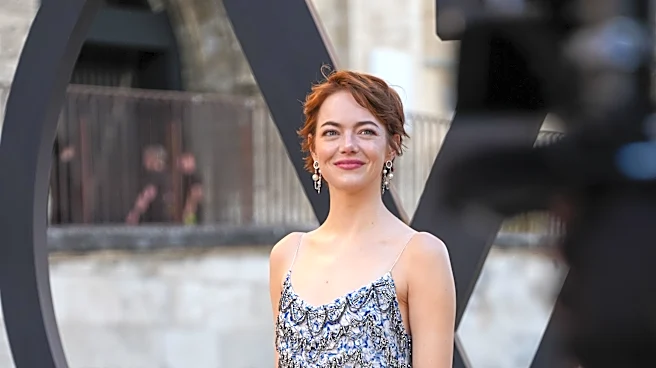
Actress Emma Stone experienced a nervous breakdown on the set of the 2011 film 'Crazy, Stupid, Love' while filming a scene with Ryan Gosling. The scene, inspired by 'Dirty Dancing,' required Gosling to lift Stone above his head to a height of approximately
six feet. Stone revealed on 'The Graham Norton Show' that she was unaware of her deep-seated fear of heights until this moment. The intense reaction forced her to leave the set, lie down, and watch a favorite movie to calm herself. This incident was exacerbated by a past traumatic experience during gymnastics classes where an instructor dropped her, resulting in two broken arms. Due to her severe reaction, the film crew ultimately had to employ a stunt double to complete the iconic lift scene. Stone has openly discussed her sensitivities and anxieties, noting that she has learned to view her emotions as strengths that inform her acting.
Why It's Important?
This event highlights the unexpected challenges actors can face during production, even when performing seemingly routine stunts. It underscores the psychological toll that can arise from on-set demands, particularly when personal traumas or phobias are unexpectedly triggered. For the entertainment industry, it emphasizes the importance of actor well-being and the need for comprehensive safety protocols that extend beyond physical risks to include psychological support. Stone's candidness about her experience also contributes to a broader conversation about mental health in Hollywood, encouraging other public figures and individuals to acknowledge and address their own vulnerabilities. Her ability to integrate these personal experiences into her craft demonstrates how actors can draw from their own lives to create more authentic and relatable performances, influencing her choice of roles that often explore themes of identity and societal relationships.
What's Next?
While this specific incident occurred in the past, its implications continue to resonate within the entertainment industry. Moving forward, there may be an increased emphasis on psychological preparedness and support for actors, especially when scenes involve potentially triggering elements. Production teams might implement more thorough discussions with actors about potential phobias or past traumas before filming physically or emotionally demanding scenes. This could lead to more proactive measures, such as pre-production consultations with mental health professionals or more detailed stunt rehearsals designed to identify and mitigate psychological risks. Emma Stone's continued openness about her experiences may also encourage other actors to share their own challenges, fostering a more supportive and understanding environment within film and television production.
Beyond the Headlines
Emma Stone's experience transcends a mere on-set anecdote, touching upon deeper themes of vulnerability, resilience, and the human condition within a high-pressure industry. Her willingness to openly discuss her nervous breakdown and its roots in a childhood trauma challenges the often-glamorized perception of celebrity, revealing the very real human struggles beneath the surface. This transparency can foster greater empathy among the public and within the industry itself, destigmatizing mental health issues. Ethically, it raises questions about the responsibility of production companies to safeguard actors' psychological well-being, not just their physical safety. Culturally, Stone's narrative contributes to a growing movement of public figures sharing their mental health journeys, which can empower others to seek help and view their own sensitivities not as weaknesses but as integral parts of their identity and even sources of strength, as Stone herself has articulated regarding her acting process.