




What's Happening?
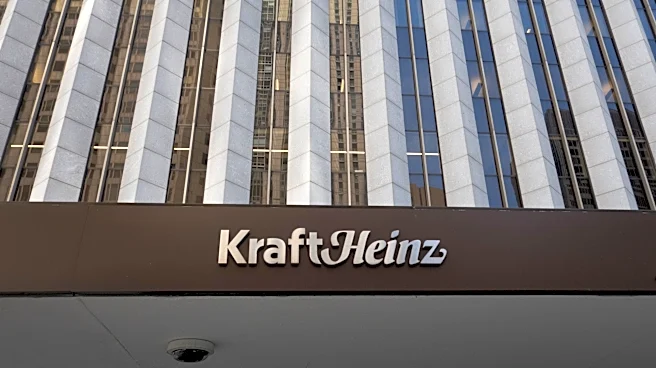
The Kraft Heinz Company hosted its 2026 Investor Day, where senior management presented a strategy aimed at achieving sustainable, volume-led profitable growth. The company outlined financial milestones through 2029 and provided initial expectations for
2027. According to CEO Steve Cahillane, Kraft Heinz is leveraging its competitive advantages to modernize its core operations in developed markets and capitalize on opportunities in emerging markets and the 'Away From Home' sector. The strategy involves building superior products and brands, delivering relevant innovation, scaling go-to-market capabilities, managing a growth-focused portfolio, and unlocking efficiencies to fuel reinvestment. The company is already observing early signs of a turnaround, including narrowing market share losses and improving volume trends across all regions, following investments made in 2026.
Why It's Important?
This strategic outline from Kraft Heinz is significant for the U.S. food and beverage industry, indicating a renewed focus on long-term, profitable growth rather than just top-line expansion. For consumers, this could mean a continued emphasis on product quality and innovation from a major player in the market. For investors, the commitment to 'double-digit total shareholder return' by 2029, through a balanced contribution from earnings growth and capital returns, signals a potentially more stable and rewarding investment. The company's efforts to unlock efficiencies and reinvest in its brands could set a precedent for other large consumer goods companies facing similar market pressures. The focus on both developed and emerging markets also highlights the global interconnectedness of the food industry and the importance of diversified growth strategies.
What's Next?
Kraft Heinz anticipates returning to both top- and bottom-line growth in the second half of 2027, with consistent top-line growth and margin expansion expected in 2028. By 2029, the company aims to achieve a self-reinforcing cycle of profitable growth and deliver double-digit total shareholder return. While formal 2027 guidance will be provided during the fourth-quarter earnings call, initial expectations suggest organic net sales will be relatively flat for the full year, with a return to growth in the latter half. Adjusted operating income is projected to decline in the low single-digits versus 2026, also with a return to growth in the second half. Free cash flow conversion is expected to remain at least 100%. These projections indicate a period of strategic execution and gradual recovery, with a clear long-term vision for sustained profitability.
Beyond the Headlines
The Kraft Heinz strategy reflects a broader industry trend where established consumer goods companies are adapting to changing consumer preferences and market dynamics. The emphasis on 'volume-led profitable growth' suggests a move away from aggressive cost-cutting measures that might have impacted product quality or brand perception in the past. This approach could foster a more sustainable competitive environment within the U.S. food sector, encouraging innovation and brand building. The company's commitment to unlocking efficiencies to fuel reinvestment also points to the ongoing importance of operational excellence and technological adoption in maintaining profitability. This strategic shift could influence supply chain practices, marketing approaches, and product development across the industry, as companies strive to balance growth with profitability in a dynamic market.