








What's Happening?
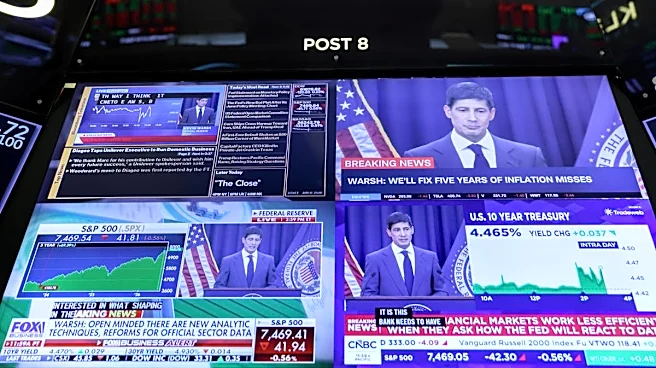
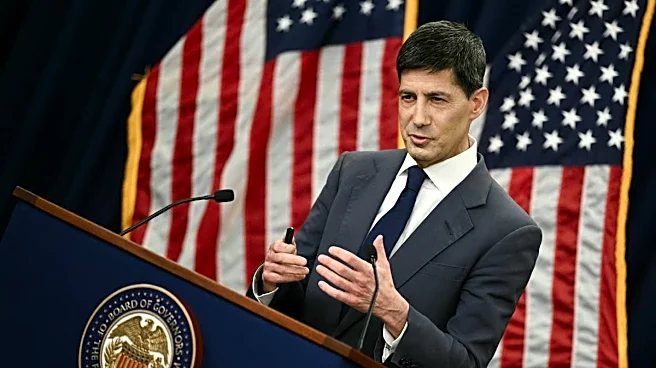
Kevin Warsh, the new chair of the Federal Reserve, has initiated a shift in the central bank's communication strategy, reducing the amount of guidance provided to financial markets. In his first press conference, Warsh cut the Fed's interest-rate decision
statement from 341 words to 132, omitting any forward guidance about future moves. This change aims to reduce market dependency on Fed signals, encouraging investors to rely more on economic data. However, this approach has led to increased market volatility, with the yield on the 10-year Treasury jumping to 4.49% from 4.43% and the S&P 500 index dropping by 1.2%. Warsh's strategy contrasts with previous Fed chairs who used forward guidance to stabilize markets and influence long-term interest rates.
Why It's Important?
Warsh's decision to limit forward guidance could have significant implications for the U.S. economy. By reducing market predictability, this approach may lead to higher borrowing costs for consumers and businesses, as seen with the potential rise in mortgage rates. The strategy also shifts the burden of market analysis onto investors, who must now interpret economic data without clear signals from the Fed. This could result in more frequent and severe market fluctuations, impacting economic stability. Additionally, Warsh's approach may empower other members of the Fed's rate-setting committee, whose public statements will gain more attention as markets seek clues about future Fed actions.
What's Next?
The long-term success of Warsh's strategy will depend on its ability to withstand economic crises. In times of financial downturns, such as the COVID-19 pandemic, forward guidance has been crucial in calming markets. Warsh's approach will be tested if similar crises occur, as the lack of clear guidance could exacerbate market instability. The Fed's new communication strategy will also be evaluated by its impact on inflation and economic growth, as investors adjust to the reduced transparency. The effectiveness of this approach will become clearer as economic conditions evolve and the Fed's task forces, announced by Warsh, begin to assess and potentially reform the central bank's operations.