






What's Happening?
UPSIDE Foods has achieved commercial-scale production and launched its cultivated chicken product, UPSIDE Chicken, in California. This marks a significant advancement for the cultivated meat industry, with the company scaling its production 10,000-fold
to produce over one million pounds of cultivated chicken annually on less than half an acre of land. The product, a blend of cultivated chicken and plant-based ingredients like soy protein, pea fiber, and olive oil, is now available in select California restaurants, corporate campuses, and university dining programs, including Stanford University. UPSIDE Chicken has received approvals from both the FDA and USDA and is also halal-certified. According to CEO Uma Valeti, MD, the company has developed a more scalable production process that has reduced costs by over 10-fold compared to previous methods, making the product comparable in price to organic chicken.
Why It's Important?
The commercial launch of UPSIDE Chicken represents a pivotal moment for the U.S. food industry and sustainable agriculture. This development demonstrates the viability of cultivated meat at a large scale, offering an alternative protein source that could reduce reliance on traditional animal agriculture. For consumers, it introduces a new option that is 'very similar in taste and texture' to conventional chicken, as noted by taste-testers. The availability in diverse settings like restaurants and university dining halls indicates a growing acceptance and integration of cultivated meat into mainstream food service. Furthermore, the halal certification expands its market reach, catering to a broader demographic. This innovation could also contribute to supply chain stability by growing meat closer to consumption points, potentially cushioning against inflation and geopolitical disruptions that affect traditional meat shipping.
What's Next?
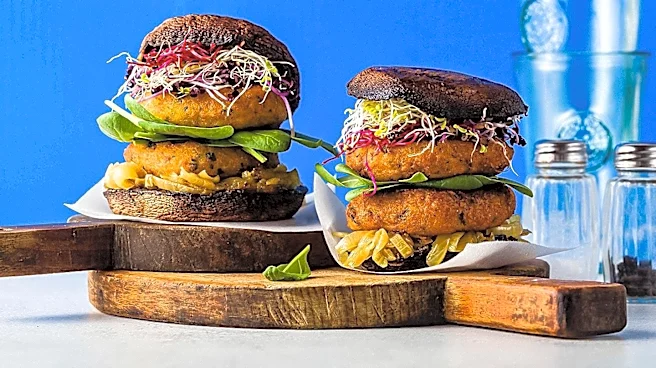
UPSIDE Foods plans to continue expanding its production capabilities, aiming to further lower costs and make cultivated meat more widely available, including in grocery stores in the mid-term. The company is actively seeking to add to its over $600 million investment base, having waited for the scaled launch and regulatory approvals before initiating its next fundraising round. Partnerships with MICHELIN Guide-starred chefs Thomas Keller and Nancy Silverton are expected to introduce UPSIDE Chicken in new culinary applications, such as a dish at Keller's Burgers & Half Bottles eatery. The company's success in scaling production and securing regulatory approvals sets a precedent for other cultivated meat companies and could accelerate the industry's growth and market penetration.
Beyond the Headlines
This commercial breakthrough in cultivated meat raises deeper implications for ethical consumption, environmental sustainability, and food security. The ability to produce meat without animal slaughter addresses ethical concerns related to animal welfare. Environmentally, cultivated meat production on a smaller land footprint could significantly reduce the ecological impact associated with traditional livestock farming, such as greenhouse gas emissions and land use. Legally and culturally, the FDA and USDA approvals, alongside halal certification, signify a growing acceptance and regulatory framework for novel food technologies. This development could also spark further innovation in food science, potentially leading to a wider array of cultivated products and reshaping consumer perceptions of what constitutes 'meat.'