



What's Happening?
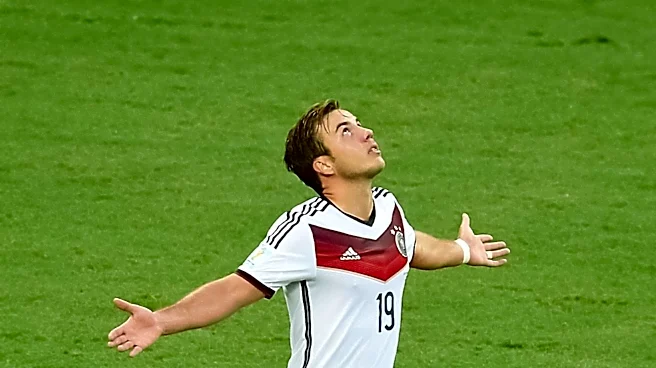
Germany secured its fourth World Cup title in 2014 by defeating Argentina 1-0 in Rio de Janeiro. This victory marked the first time a European nation won the tournament on South American soil. The German team, known for its depth and tactical flexibility,
showcased a blend of veteran leadership and emerging talent. The path to the final included a notable 7-1 victory over Brazil in the semifinals, demonstrating Germany's strategic prowess. The team's success was attributed to years of institutional reform and a coherent playing philosophy emphasizing positional play and intelligent pressing.
Why It's Important?
Germany's 2014 World Cup victory is significant as it highlights the importance of strategic planning and squad depth in international football. The team's success serves as a model for other nations, emphasizing the value of developing technically proficient players and maintaining a versatile playing style. This victory also reinforced Germany's position as a powerhouse in global football, influencing club and national team strategies across Europe. The emphasis on tactical innovation and player development continues to shape discussions about national team success and the evolution of the sport.