




What's Happening?
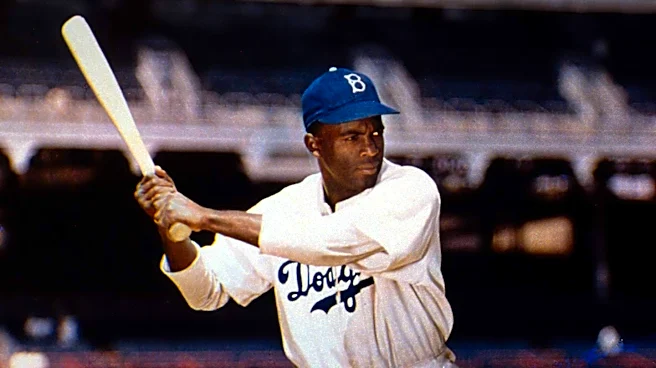
On November 18, 1949, Brooklyn Dodgers infielder Jackie Robinson was awarded the National League MVP title following his third season in Major League Baseball. This achievement marked a significant milestone as Robinson became the first African-American
player to receive the MVP Award, two years after he broke the color barrier in April 1947. During his MVP season, Robinson played 156 games, achieving career highs with a .342 batting average, 37 stolen bases, and 124 RBIs. He also led the Majors in stolen bases and was the NL batting champion. This season initiated a six-year streak of All-Star selections for Robinson. His career with the Dodgers spanned 10 years, during which he maintained a .311 batting average, hit 137 home runs, and recorded 197 stolen bases. Robinson's impact extended beyond statistics, as he was also a recipient of the Rookie of the Year Award early in his career.
Why It's Important?
Jackie Robinson's 1949 MVP award holds immense historical and cultural significance, transcending the realm of sports. His achievement as the first African-American MVP further solidified his role as a pioneer in the civil rights movement, demonstrating that excellence and talent could overcome racial barriers in a highly visible public arena. This award not only recognized his exceptional athletic performance but also served as a powerful symbol of progress and integration in American society. For African-American communities, it was a moment of profound pride and inspiration, showcasing the potential for success against systemic discrimination. Within baseball, Robinson's success paved the way for more diverse talent to enter the league, fundamentally changing the sport's demographic landscape and contributing to its broader appeal. His legacy continues to influence discussions on equality and representation in sports and beyond, making this award a landmark event in U.S. history.
What's Next?
While the event itself is historical, Jackie Robinson's legacy continues to be honored and celebrated in contemporary baseball and American culture. Annually, on April 15th, Major League Baseball commemorates Jackie Robinson Day, where all players wear his iconic No. 42 jersey, which was retired across the league in his honor. The Dodgers also retired his number in June 1972 and unveiled a statue of him at Dodger Stadium on April 15, 2017, to mark the 70th anniversary of him breaking the color barrier. These ongoing tributes ensure that future generations understand his profound impact on sports and civil rights. Discussions around diversity, equity, and inclusion in sports often reference Robinson's pioneering efforts, highlighting the continued relevance of his struggle and achievements in ongoing efforts to promote social justice.
Beyond the Headlines
Jackie Robinson's MVP award in 1949 represents more than just an athletic accolade; it symbolizes a pivotal moment in the broader struggle for civil rights in the United States. His success on the field challenged deeply ingrained racial prejudices and demonstrated the fallacy of segregationist ideologies. By excelling under immense pressure and scrutiny, Robinson not only broke barriers in baseball but also contributed significantly to the momentum of the civil rights movement. His dignified conduct and exceptional performance forced many Americans to confront their biases, fostering a gradual shift in public opinion. The award underscored the idea that merit, not race, should determine opportunity and recognition. This cultural impact extended beyond sports, influencing other sectors of American society and laying groundwork for future advancements in equality. Robinson's story remains a powerful narrative about resilience, courage, and the transformative power of individual action in the face of systemic injustice.