



What's Happening?
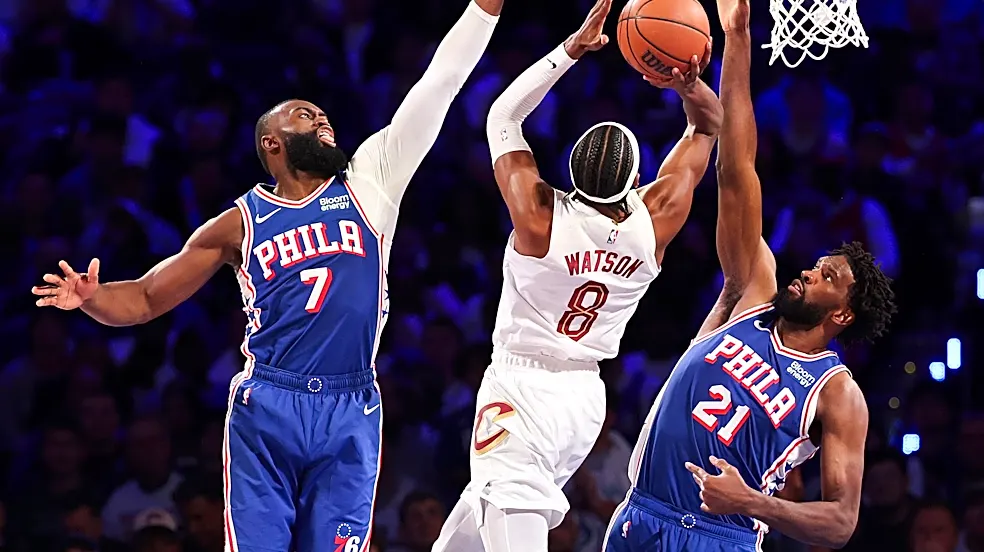
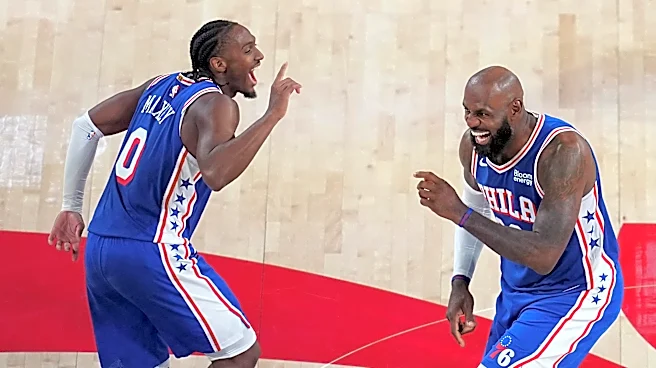
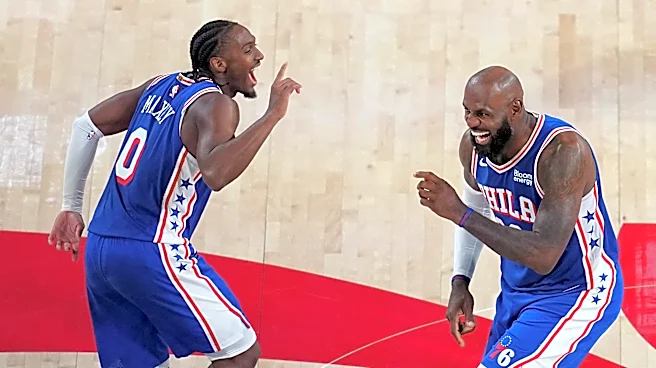
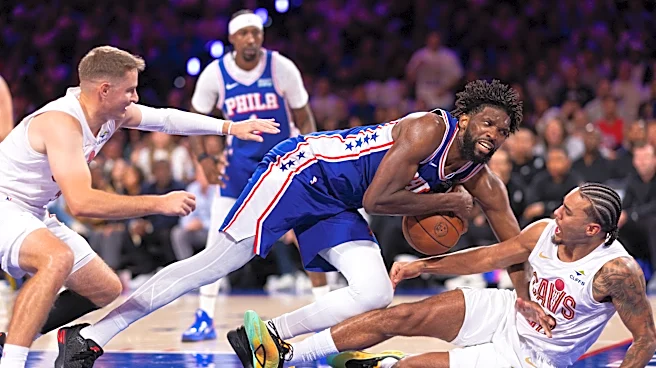
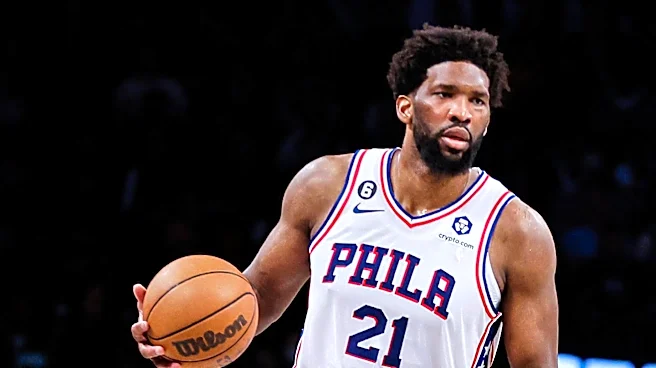
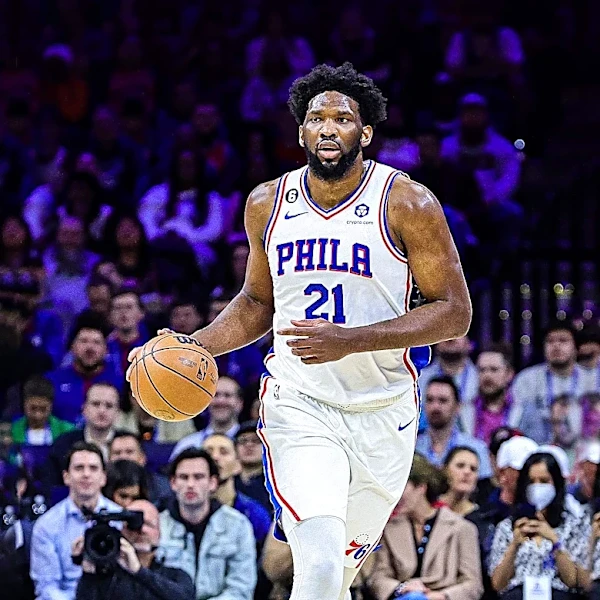
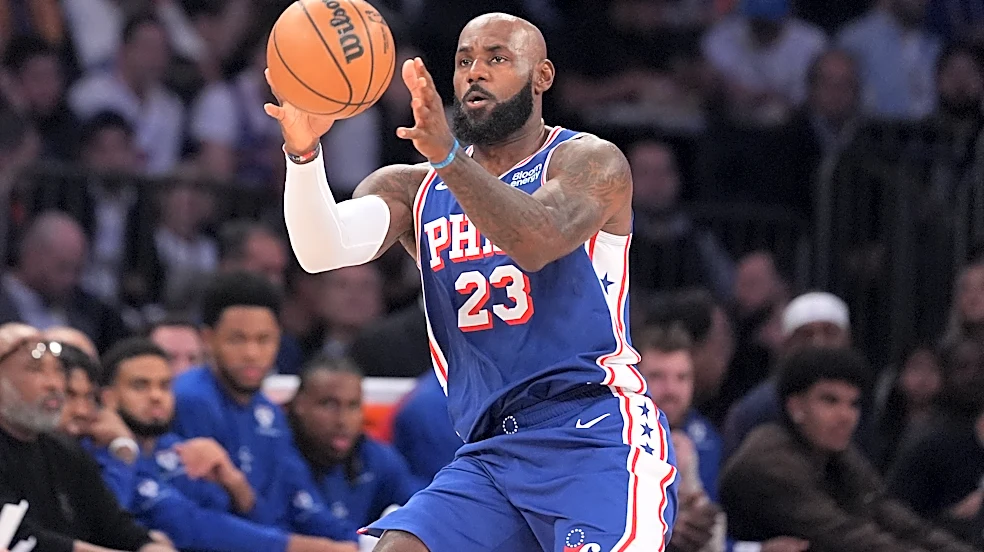
Joel Embiid, center for the Philadelphia 76ers, recorded 24 points, seven rebounds, and one assist in 34 minutes during Thursday's 114-106 victory over the Cleveland Cavaliers. His performance was crucial in the 76ers' comeback from a 29-point deficit,
with Embiid scoring 15 points in the second half. This marked a more polished offensive outing for Embiid compared to his previous game against the Knicks, where he shot 4-for-15 from the field. Following the win, Embiid indicated he would sit out one of the team's upcoming back-to-back games this weekend. The 76ers are scheduled to play the Milwaukee Bucks on Saturday and the Detroit Pistons on Sunday. He did not specify which game he would miss, according to Derek Bodner of AllPHLY.com.
Why It's Important?
Embiid's decision to sit out one game of a back-to-back highlights the ongoing strategy of load management for star players in the NBA, particularly for those with a history of injuries. While his strong performance was vital in the 76ers' significant comeback, his planned absence underscores the team's focus on his long-term health and availability, especially early in the season. This approach aims to prevent injuries and ensure he is in peak condition for the playoffs, which is critical for a team with high championship aspirations. For fans and fantasy basketball managers, this means uncertainty regarding his participation in specific games, impacting team lineups and betting decisions. The 76ers' ability to secure a win despite a large deficit, even with Embiid's eventual rest, also demonstrates the team's depth and resilience, which will be crucial throughout the demanding NBA season.
What's Next?
Joel Embiid will sit out either Saturday's game against the Milwaukee Bucks or Sunday's game against the Detroit Pistons. The specific game he will miss is yet to be announced, which will be a key piece of information for both the 76ers' coaching staff in planning their rotations and for opposing teams in preparing their strategies. The 76ers will need to demonstrate their ability to perform effectively without their star center for one of these matchups. This period will also provide an opportunity for other players to step up and contribute, further testing the team's depth and cohesion. The team's performance in these games, particularly the one Embiid sits out, will offer early insights into their capacity to manage his load and maintain a competitive edge.
Beyond the Headlines
The practice of load management, exemplified by Embiid's decision, reflects a broader shift in professional sports towards prioritizing athlete longevity and performance optimization over playing every possible game. This trend has significant implications for the NBA, affecting everything from regular-season competitiveness and fan engagement to broadcasting schedules and player contracts. While some argue it diminishes the regular season's appeal, others contend it protects players and enhances the quality of play in crucial late-season and playoff games. For the 76ers, managing Embiid's minutes and health is paramount, given his past injury history and his central role in their championship aspirations. This strategic approach could become a model for other teams with star players, influencing how player health is managed across the league and potentially leading to further discussions about the structure of the NBA season.