





What's Happening?
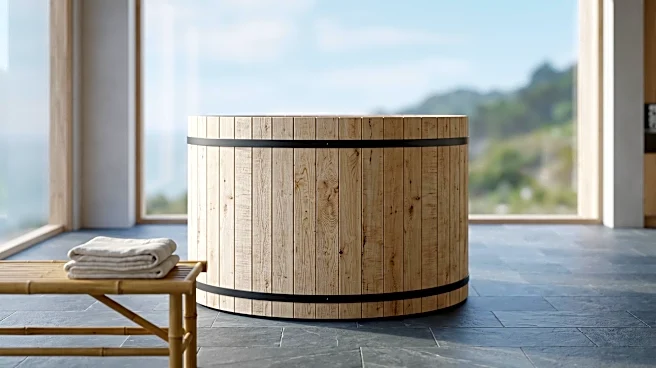
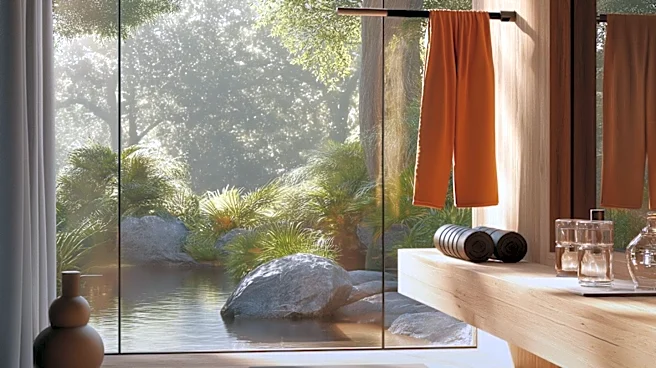
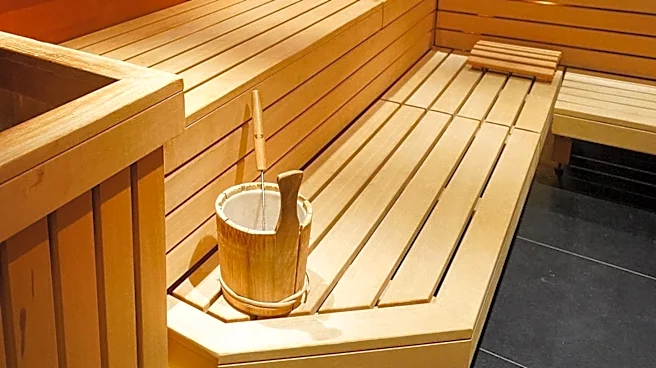
Across U.S. cities, including Venice, California, and downtown New York City, sauna and cold-plunge facilities are gaining popularity as social hubs, often referred to as 'third places.' These establishments are being explicitly positioned as alternatives
to traditional drinking culture, fostering community and connection. Operators are creating spaces where individuals can engage in wellness practices like heat exposure and cold immersion, while also socializing. This trend reflects a broader shift where practices once considered niche or associated with specific subcultures, such as endurance athletes or traditional bathing rituals, are moving into mainstream conversations about performance, recovery, and health. The integration of elements like artists, chefs, DJs, breathwork, and coffee further enhances the community aspect, transforming these wellness centers into vibrant social environments.
Why It's Important?
The emergence of sauna and cold-plunge spaces as 'third places' signifies a notable shift in American social dynamics and consumer preferences. Historically, 'third places' like cafes, libraries, or community centers have been crucial for fostering social cohesion and informal interaction outside of home and work. The decline of some traditional third places and the rise of digital interactions have created a void that these new wellness-focused venues are beginning to fill. This trend could have significant implications for urban planning, local economies, and public health. For businesses, it presents an opportunity to innovate in the wellness and hospitality sectors, catering to a growing demand for health-conscious social alternatives. For individuals, it offers new avenues for community engagement and stress reduction, potentially contributing to improved mental and physical well-being. The movement away from alcohol-centric social environments also suggests a cultural shift towards more mindful and health-oriented lifestyles.
What's Next?
The continued growth of these wellness-oriented 'third places' is likely to prompt further innovation in their offerings and expansion into more U.S. cities. We can anticipate more diverse programming, potentially including workshops, educational sessions on health and wellness, and collaborations with local businesses and artists. As these spaces gain traction, there may be increased investment from entrepreneurs and larger wellness brands, leading to more sophisticated facilities and broader accessibility. Local governments and urban planners might also begin to recognize the value of these establishments in promoting community well-being and consider integrating them into urban development strategies. Furthermore, the success of these venues could inspire the creation of other novel 'third places' that blend social interaction with specific health or lifestyle practices, further diversifying the options available for community building in the U.S.
Beyond the Headlines
Beyond their immediate social and economic impact, the rise of sauna and cold-plunge 'third places' touches upon deeper cultural and psychological dimensions. In an increasingly digital and often isolating society, these spaces offer a tangible, in-person antidote, emphasizing physical sensation and shared vulnerability. The act of enduring discomfort together in a sauna or cold plunge can foster a unique sense of camaraderie and authenticity, contrasting with the curated personas often presented in online interactions. This trend also highlights a re-evaluation of the body's role in modern life, moving beyond mere physical appearance to an appreciation of its capabilities, resilience, and sensory experiences. It suggests a societal yearning for rituals and communal experiences that connect individuals to their primal selves and to each other, offering a form of 'bio-social' engagement that integrates personal well-being with collective belonging.