






What's Happening?
On Monday morning, November 9, 2026, Bitcoin's price was approximately $74,800, following a dip to $73,477 on Sunday evening, its lowest point since August 21. The cryptocurrency has concluded its fifth consecutive losing week, marking a 4.45% decrease.
The 200-day moving average for Bitcoin stands at around $73,170, a critical support level that has not been breached on a daily closing basis since August 19. The market is currently anticipating the release of U.S. consumer price data for October 2026 on Tuesday, November 10, which is expected to significantly influence Bitcoin's price trajectory. Additionally, BlackRock's IBIT ETF experienced outflows totaling $1.21 billion over five trading days in the first week of November, contributing to selling pressure.
Why It's Important?
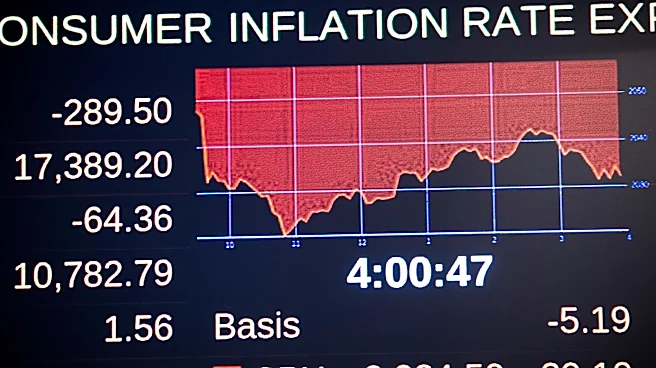
The current price movements and the upcoming inflation data are crucial for the U.S. cryptocurrency market and investors. A sustained drop below the 200-day moving average could signal a shift from a correction to a long-term downtrend, potentially impacting investor confidence and market stability. The outflows from BlackRock's IBIT ETF highlight a significant trend of institutional selling, which directly affects the spot market by increasing supply. Conversely, Fidelity's FBTC has seen inflows, indicating a mixed institutional sentiment. The U.S. consumer price index release is a key economic indicator that could influence the Federal Reserve's interest rate decisions. Higher-than-expected inflation could lead to increased Treasury yields and a stronger U.S. dollar, typically putting downward pressure on risk assets like Bitcoin, affecting U.S. investors and the broader financial landscape.
What's Next?
The immediate focus for Bitcoin investors and the broader market is the release of U.S. consumer prices for October on Tuesday, November 10, at 2:30 p.m. German time. This data is expected to be the most significant event of the week for Bitcoin, as it will likely dictate whether the price holds above or breaks below the 200-day moving average. Market participants are likely to hold off on major moves until after this announcement. If inflation figures are higher than anticipated, Bitcoin could face further downward pressure. Conversely, a lower figure might provide some relief. The continuation or cessation of outflows from major Bitcoin ETFs, particularly BlackRock's IBIT, will also be closely monitored, as these flows directly impact market liquidity and price stability.
Beyond the Headlines
The current situation underscores the increasing interconnectedness of the cryptocurrency market with traditional macroeconomic indicators, particularly in the U.S. The reliance on inflation data and Federal Reserve policy signals highlights Bitcoin's evolving role from a niche digital asset to one influenced by broader economic forces. The behavior of institutional investment vehicles like ETFs, with their significant capital flows, demonstrates their growing impact on Bitcoin's price discovery and market sentiment. This trend suggests a maturation of the cryptocurrency market, where traditional financial analysis and economic calendars are becoming as relevant as on-chain metrics. The ongoing debate about Bitcoin's 'digital gold' thesis is also being tested, as its price movements are increasingly correlated with other risk assets rather than acting as a sole hedge against inflation.