
What's Happening?
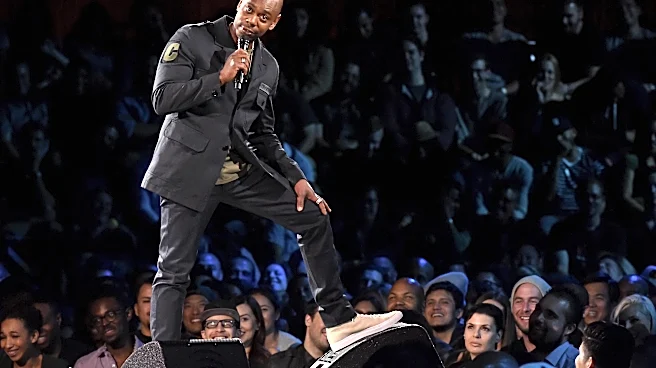
Comedians Rob Schneider and Tim Young have publicly condemned Dave Chappelle following a leaked video that reportedly shows Chappelle making a controversial joke. The joke, which has sparked widespread rebuke, allegedly involved Chappelle expressing positive
feelings after the assassination of Charlie Kirk. The specific content of the joke and the context in which it was delivered have not been fully detailed in the available information, but the reaction from fellow comedians indicates a significant level of disapproval. This incident adds to a history of controversial statements made by Chappelle during his performances, which have often drawn both criticism and defense from various segments of the public and entertainment industry. The condemnation from Schneider and Young highlights a division within the comedy community regarding the boundaries of humor and acceptable discourse.
Why It's Important?
This incident is important because it reignites discussions within the entertainment industry and broader society about the limits of free speech, particularly in the context of comedic performance. The condemnation from other comedians like Rob Schneider and Tim Young suggests a potential shift in how controversial humor is perceived and tolerated, even among peers. For Dave Chappelle, a figure known for pushing boundaries, this backlash could impact his public image and future engagements, especially if it leads to broader industry or audience disapproval. It also underscores the increasing scrutiny public figures face in the digital age, where leaked content can quickly spread and provoke widespread reactions, influencing public opinion and potentially affecting careers. The incident could also set a precedent for how comedians address sensitive topics, potentially leading to more self-censorship or, conversely, a stronger defense of provocative humor.
What's Next?
The immediate aftermath of this condemnation could see further reactions from other figures in the entertainment industry, potentially leading to a wider debate on the role and responsibility of comedians. Dave Chappelle may choose to address the controversy directly, either to clarify his remarks, apologize, or defend his comedic approach. The incident could also influence audience attendance and critical reception for his upcoming performances, including any potential future tours or specials. Depending on the sustained public and industry reaction, there might be calls for platforms or venues to take a stance on the content of performances, which could have implications for artistic freedom in comedy. The ongoing discussion will likely continue to shape public perception of Chappelle and the broader landscape of stand-up comedy.
Beyond the Headlines
Beyond the immediate controversy, this event touches upon deeper societal questions regarding humor, offense, and the evolving standards of public discourse. It highlights the tension between artistic expression and social responsibility, particularly when humor touches upon sensitive or tragic events. The differing reactions to Chappelle's joke reflect a broader cultural divide on what constitutes acceptable satire or commentary. This incident could also contribute to a re-evaluation of 'cancel culture' within the comedy world, prompting discussions about whether public figures should be held accountable for controversial statements and to what extent. Ultimately, it underscores the power of language and the significant impact that comedic performances can have on public sentiment and social norms.