







What's Happening?
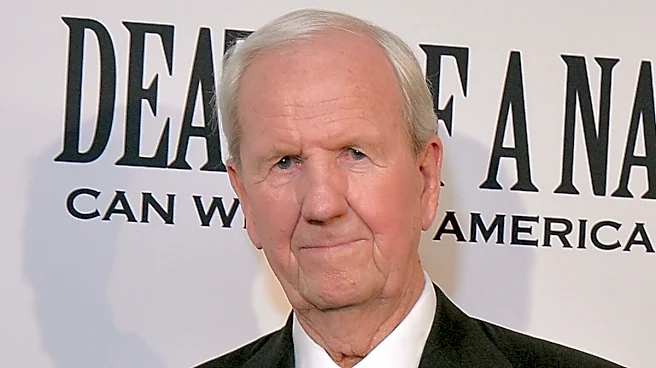
Renowned film producer Gerald Robert Molen, a long-time collaborator with director Steven Spielberg, has passed away in the United States at the age of 91. Molen was a key producer for several iconic films, including the Oscar-winning 'Schindler’s List,'
which depicted the rescue of Jews during the Holocaust. His extensive filmography also includes major productions such as 'Jurassic Park,' 'Hook,' and 'Minority Report.' Molen's grandniece, Rachel Lorraine Pullan, announced his death via an Instagram post, which was subsequently reported by Deadline on November 26. The cause of his death has not been disclosed by the family. Molen's career in Hollywood began in 1957 as a truck driver, eventually leading him to become a highly respected producer. He started his collaboration with Steven Spielberg in 1985 on 'The Color Purple' as a production manager and later served as head of production at Spielberg’s Amblin Entertainment. His career highlights include winning an Oscar for Best Picture in 1994 for 'Schindler’s List' alongside Steven Spielberg and Branko Lustig.
Why It's Important?
Gerald Robert Molen's passing marks the end of an era for a significant figure in American cinema. His contributions as a producer were instrumental in bringing some of the most critically acclaimed and commercially successful films to the screen, profoundly impacting the landscape of Hollywood. His work on 'Schindler’s List' not only earned him an Academy Award but also helped create a powerful cinematic testament to a crucial historical event, influencing public understanding and remembrance of the Holocaust. Molen's dedication to storytelling and his ability to manage complex productions were vital to the success of films like 'Jurassic Park,' which revolutionized special effects and captivated global audiences. His insistence on a PG-13 rating for 'Minority Report' over a stricter R rating demonstrates his commitment to making films accessible to a wider audience, reflecting a producer's influence on a film's reach and cultural impact. His career trajectory, from a truck driver to an Oscar-winning producer, serves as an inspiring narrative within the film industry, highlighting the potential for advancement through dedication and talent.
What's Next?
The legacy of Gerald Robert Molen will continue to influence the film industry through the enduring impact of the movies he helped create. Film archives, educational institutions, and cinematic retrospectives are likely to continue featuring his work, ensuring that his contributions to storytelling and film production are remembered and studied. While his direct involvement in new projects has concluded, the principles he upheld, such as his moral integrity and commitment to accessible storytelling, may serve as a benchmark for future producers. The films he produced will remain a significant part of American cinematic history, continuing to be viewed and analyzed by new generations of filmmakers and audiences. His passing may also prompt renewed discussions within the industry about the vital, often behind-the-scenes, role of producers in shaping cinematic art and its cultural resonance.
Beyond the Headlines
Beyond his direct contributions to film production, Gerald Robert Molen's career highlights deeper aspects of the film industry's evolution and its ethical considerations. His journey from a truck driver to an Oscar-winning producer exemplifies the meritocratic potential within Hollywood, where talent and perseverance can lead to significant achievements regardless of initial background. His insistence on a PG-13 rating for 'Minority Report' underscores the often-unseen ethical dilemmas producers face regarding audience accessibility and commercial viability versus artistic vision. This decision reflects a producer's power to shape a film's reception and its potential cultural footprint. Molen's long-standing collaboration with Steven Spielberg also illustrates the importance of enduring professional relationships in the creative arts, where trust and shared vision can lead to a consistent output of high-quality work. His life story serves as a testament to the multifaceted nature of film production, involving not just creative input but also significant logistical, financial, and ethical considerations.