






What's Happening?
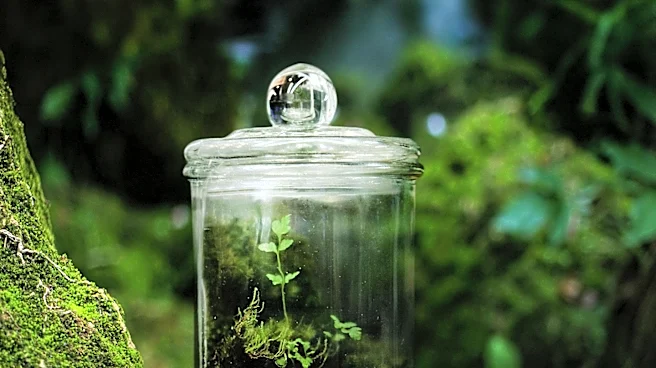
A growing trend among American consumers is the reuse of glass jars for various purposes, from food storage to crafting. This practice is driven by a desire to reduce waste and make environmentally conscious choices. However, experts like Paul Ferraro
from Johns Hopkins University argue that while reusing jars can be psychologically satisfying, it has minimal impact on the environment compared to larger systemic changes. The production and transportation of glass have significant environmental costs, and the benefits of reusing jars are often offset by the emissions from manufacturing and shipping new containers.
Why It's Important?
The discussion around reusing glass jars highlights the complexities of individual versus collective environmental actions. While personal efforts to reduce waste are commendable, they may not significantly contribute to environmental sustainability without broader systemic changes. This underscores the need for policies that address the root causes of environmental degradation, such as improving recycling systems and reducing reliance on single-use packaging. The conversation also reflects a growing public awareness and willingness to engage in sustainable practices, which can drive demand for more environmentally friendly products and policies.
Beyond the Headlines
The trend of reusing glass jars also touches on cultural and psychological aspects of consumer behavior. Many individuals find satisfaction in repurposing items, which can be linked to a sense of nostalgia or a desire for self-sufficiency. This behavior can foster a community of like-minded individuals who share tips and ideas for sustainable living. However, it also raises questions about the balance between personal responsibility and systemic change in addressing environmental issues. Encouraging collective action and policy changes may be more effective in achieving significant environmental benefits.