
What's Happening?
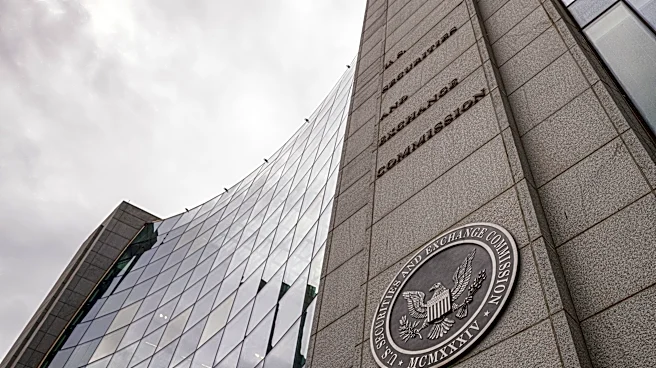
New York City Comptroller Mark Levine has formally urged the U.S. Securities and Exchange Commission (SEC) to withdraw its proposed rescission of Rule 14a-8. This rule governs shareholder proposals and is considered
a vital investor protection mechanism. Comptroller Levine, who oversees approximately $325 billion in assets for the five New York City Pension Funds, argues that eliminating Rule 14a-8 would severely weaken corporate accountability and investor rights. He also opposes proposed amendments to Rule 14a-4(c), which would expand management's discretionary voting authority. The Comptroller's office highlights that the New York City Pension Funds, with investments in over 3,000 U.S. public companies, frequently utilize Rule 14a-8 to promote positive changes in portfolio companies. The concern is that rescinding this rule, especially while the SEC is also considering reducing mandatory disclosures under Regulation S-K, would create a less transparent and accountable corporate environment.
Why It's Important?
The potential rescission of Rule 14a-8 carries significant implications for U.S. capital markets and investor confidence. This rule provides a crucial avenue for shareholders to influence corporate governance, identify emerging risks, and seek additional information beyond mandatory disclosures. Its elimination would remove a key tool for promoting corporate accountability, particularly for large, diversified investors like pension funds that cannot easily exit companies due to governance concerns. The proposed changes could lead to a less efficient market by shifting the burden and cost of information gathering from issuers to investors. This could make it harder to identify and price risk accurately, potentially undermining the integrity and competitiveness of U.S. capital markets. Furthermore, it could encourage a 'race to the bottom' in shareholder rights, as states and companies might impose restrictive ownership thresholds and procedural barriers, fragmenting investor protections.
What's Next?
The SEC's proposal to rescind Rule 14a-8 is currently in a public comment period. The Commission will review all submitted comments, including those from Comptroller Levine, before making a final decision. If the SEC proceeds with the rescission, it could lead to increased litigation as shareholders may resort to legal challenges to assert their rights, rather than relying on the established administrative process. This would increase costs for both investors and issuers and make shareholder rights less predictable. Conversely, if the SEC withdraws the proposal, it would preserve the existing framework for shareholder proposals, maintaining a mechanism for investor engagement and corporate accountability. The outcome will significantly influence the balance of power between corporate management and shareholders in the U.S. market.
Beyond the Headlines
The debate over Rule 14a-8 touches upon fundamental principles of corporate governance and the role of shareholders in overseeing public companies. The rule has historically served as a mechanism for private ordering, allowing investors to establish market standards and address governance gaps that regulations might not yet cover. Examples cited include the expansion of proxy access, enhanced executive clawback policies, and increased workforce demographic disclosures, all driven by shareholder proposals. Rescinding the rule could stifle such initiatives, potentially leading to less proactive corporate responses to evolving societal and environmental concerns. It also raises questions about the SEC's interpretation of its statutory authority and whether wholesale rescission is a justified response to perceived shortcomings, rather than more targeted reforms. The long-term implications could include a shift towards less transparent corporate practices and a diminished voice for investors in shaping corporate behavior.