



What's Happening?
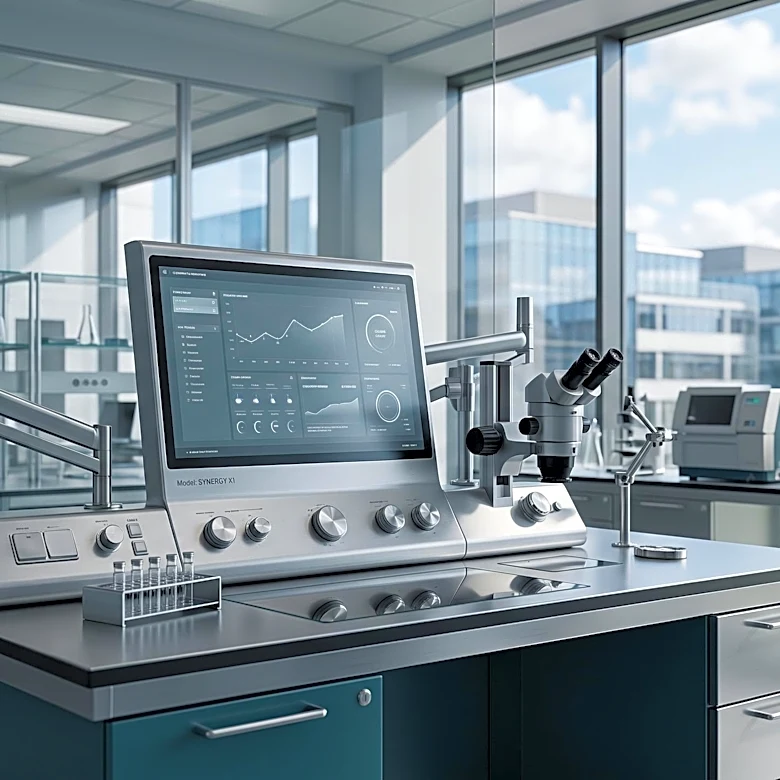
Waters Corporation has announced the launch of AI-Powered Peak Integration, a new feature for its Empower Software, which is widely used in regulated laboratories for chromatography data systems. This new capability aims to automate the peak integration
process, a step traditionally prone to variability and time-consuming manual intervention. The AI and machine learning models are trained using each laboratory's specific data to remove noise peaks, combine high molecular weight peaks, and edit baselines. The system provides explainable outputs, allowing analysts to review results with confidence. This development is part of Waters' broader strategy to embed intelligent AI, machine learning, and automation into its cloud-based software offerings. A pilot study with a major pharmaceutical customer demonstrated a 95% reduction in manual interventions, 50% faster review times, and a 72% decrease in user-to-user variability, enhancing data integrity and accuracy. This premium feature will be available via subscription, with early access starting in December 2026 and validated deployment expected by mid-2027.
Why It's Important?
This innovation is significant for regulated laboratories, particularly in the pharmaceutical industry, where data integrity, accuracy, and efficiency are paramount. Manual peak integration has historically been a major source of variability and a bottleneck in data review processes. By automating this step with AI, Waters Corporation addresses critical challenges, potentially accelerating drug development and release cycles. The reported reductions in manual intervention, review time, and user-to-user variability can lead to substantial cost savings and improved operational efficiency for laboratories. Furthermore, the ability to train AI models on a laboratory's own data ensures relevance and accuracy, while explainable outputs maintain transparency and trust in the automated results. This move also reinforces the trend of integrating advanced AI capabilities directly into existing, validated software environments, ensuring compliance and data control within highly regulated sectors.
What's Next?
Waters Corporation is currently enrolling customers for early access to the AI-Powered Peak Integration, which is set to begin in December 2026. A validated, compliant deployment is anticipated by mid-2027. This phased rollout will allow laboratories to gradually adopt and integrate the new technology into their workflows. The company plans to continue expanding its suite of premium AI capabilities within Empower Software, building on previous innovations like AI-Powered Anomaly Detection launched in 2025. Future developments will likely focus on further automating and optimizing various aspects of chromatography data processing and analytical science, aiming to create a more connected and intelligent platform for regulated scientific research and quality control. The success of this integration could set a precedent for other analytical instrumentation companies to follow suit, driving broader AI adoption in regulated scientific fields.
Beyond the Headlines
The introduction of AI-Powered Peak Integration highlights a broader shift towards autonomous and intelligent systems in highly regulated scientific domains. This technology not only streamlines complex analytical processes but also addresses the ethical and practical concerns surrounding AI in critical applications. By providing explainable outputs and maintaining version-controlled, no-drift models, Waters Corporation is building trust in AI-driven decision-making within environments where precision and accountability are non-negotiable. This approach could mitigate concerns about 'black box' AI and foster greater acceptance among scientists and regulators. The emphasis on compliant data at scale, with AI operating within validated environments, suggests a future where AI tools are seamlessly integrated into existing regulatory frameworks, rather than operating as separate, potentially non-compliant entities. This could pave the way for more widespread adoption of AI in other sensitive industries, ensuring that technological advancement aligns with stringent quality and safety standards.