






What's Happening?
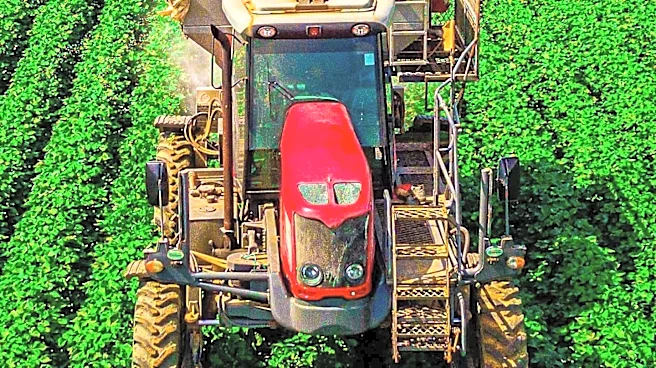
Applied Intuition, a Silicon Valley company specializing in self-driving software for various vehicles, successfully retrofitted a 15-ton farm sprayer to operate autonomously in approximately 30 days. A team of five engineers, with only one working full-time
on the project, utilized agentic AI to process the machine's 1,000-page manual within hours. The company integrated its existing drive-by-wire controller, planners, and models, which were previously developed for mining and on-road applications, into the sprayer's electronics to manage steering, acceleration, and boom operations. This rapid development was possible because about 70 percent of Applied Intuition's Self-Driving System is shared across different industries. The self-driving sprayer is currently operational at the company's test site, in agricultural fields, and on private roads. The system is equipped with sensors designed to detect and react to people, vehicles, and animals. The company has not disclosed the manufacturer of the sprayer or any specific customer for this technology.
Why It's Important?
This rapid development by Applied Intuition signifies a significant advancement in agricultural technology and the broader application of AI in autonomous systems. The ability to quickly convert existing heavy machinery into self-driving units could revolutionize farming practices by increasing efficiency and productivity. Farmers often face tight operational windows due to weather conditions, such as wind speeds affecting chemical spray drift and rain washing away treatments. Autonomous sprayers capable of operating around the clock could add an estimated 150 hours of operational time per sprayer annually, optimizing resource utilization and potentially improving crop yields. This innovation also demonstrates the versatility and reusability of advanced AI and self-driving software across diverse industrial sectors, highlighting a trend towards more integrated and adaptable autonomous solutions. The success in retrofitting existing equipment rather than requiring entirely new machinery could also lower adoption barriers for agricultural businesses.
What's Next?
The immediate next steps for Applied Intuition involve further testing and refinement of the self-driving farm sprayer, particularly for operation on public roads between fields. This will require navigating evolving regulations and safety standards for autonomous agricultural machinery. The company will likely seek partnerships with agricultural equipment manufacturers or large farming operations to scale the deployment of this technology. As the system proves its reliability and efficiency, it could lead to broader adoption of autonomous solutions in agriculture, potentially influencing the design of future farm equipment. The development also sets a precedent for how quickly specialized industrial vehicles can be automated using existing AI frameworks, suggesting a future where similar rapid retrofits could occur in other sectors like construction or logistics. The unnamed customer and sprayer maker indicate potential future announcements regarding commercialization plans.
Beyond the Headlines
The rapid development of this self-driving farm sprayer by Applied Intuition points to deeper implications regarding the future of labor in agriculture and the ethical considerations of autonomous systems. While increased efficiency is a clear benefit, the widespread adoption of such technology could impact agricultural employment, shifting demand from manual labor to roles requiring oversight and maintenance of autonomous fleets. Furthermore, the use of AI to digest complex manuals in hours highlights a growing trend where AI can rapidly acquire and apply specialized knowledge, potentially accelerating innovation cycles across industries. The integration of sensors to react to people, vehicles, and animals also underscores the critical importance of safety and liability in autonomous operations, especially in dynamic environments like farms. As these machines become more prevalent, discussions around data privacy, cybersecurity for agricultural systems, and the societal impact of automation in rural economies will become increasingly relevant.